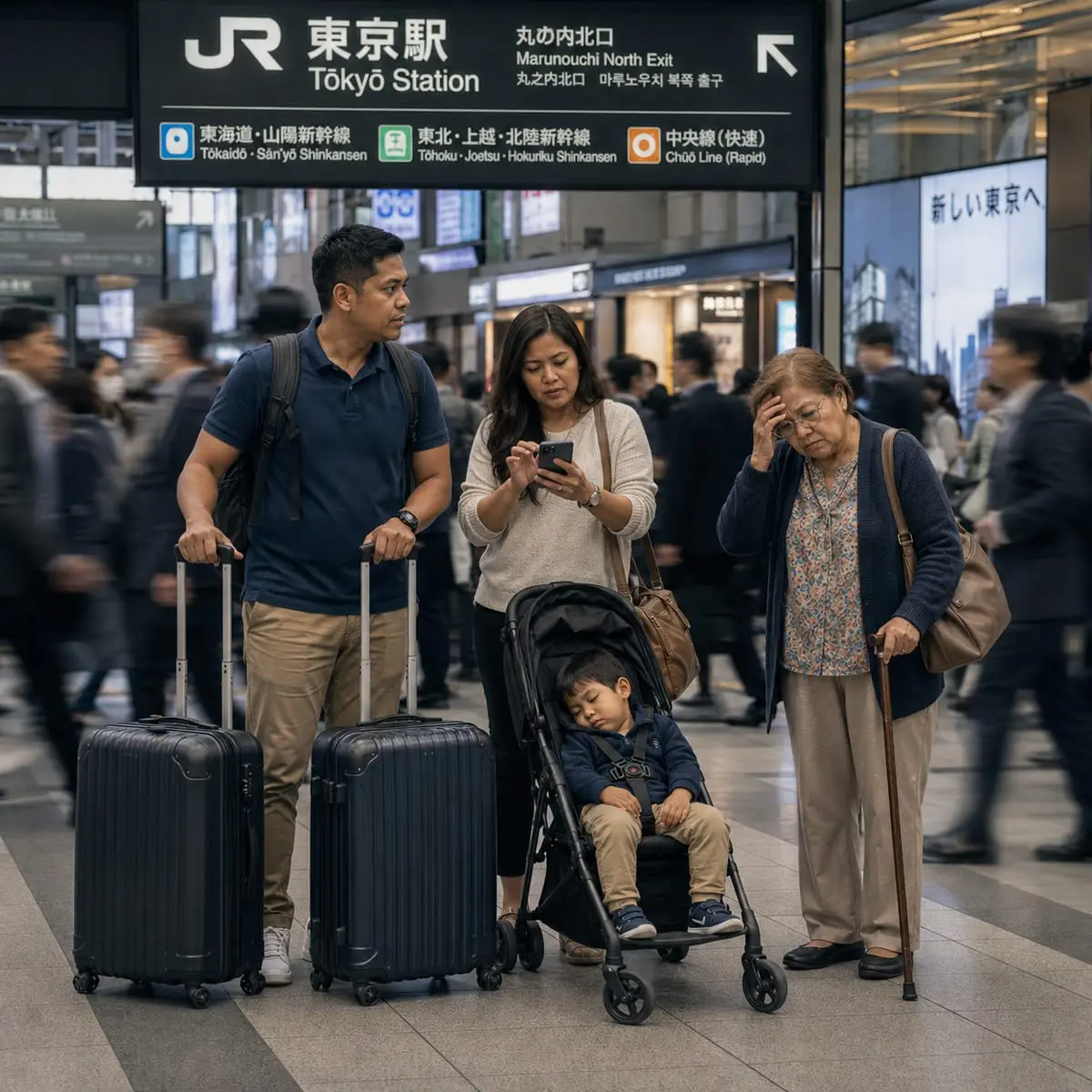
Japan is famously easy to explore by public transportation, but a journey that feels simple for one adult can feel very different for a family. Parents may be moving a stroller, snacks, jackets and shopping bags. Grandparents may need a slower pace. A larger group must stay together through stations, platforms, transfers and crowded streets.
A private tour does not automatically make every trip better, and it is rarely the cheapest option for a small family. Its value comes from reducing the difficult parts around transportation: hotel-to-station walks, repeated transfers, waiting with tired children, managing luggage and coordinating several people with different energy levels.
This guide explains when a private tour is likely to be worth the cost, when trains or taxis may be more practical, and how families can combine different transportation options instead of paying for a private vehicle every day.
At a glance: is a private tour likely worth it?
| Family situation | Likely value of a private tour |
|---|---|
| Couple with one older child and light luggage | Possibly unnecessary for simple urban routes |
| Parents with a baby, toddler or stroller | Often worthwhile on demanding sightseeing days |
| Family traveling with grandparents | Often worthwhile, especially when walking is limited |
| Group of six to nine travelers | Strongly worth considering |
| Family visiting Mount Fuji or scattered rural attractions | Often worthwhile |
| Family sightseeing only in central Tokyo | Depends on the route and mobility |
| Family carrying several suitcases | Useful for airport transfers and hotel changes |
| Budget-focused family comfortable with trains | Public transportation may be better |
| Family with wheelchair or mobility requirements | Usually worth considering after confirming access needs |
Why families consider private tours in Japan
Japan can be straightforward to navigate, but family travel is not only about whether a train exists. The full journey includes getting everyone ready, walking to the station, finding the correct entrance, locating an elevator, buying or using tickets, changing platforms, reaching the attraction and repeating the process several times during the day.
The small difficulties can accumulate. A ten-minute walk may be easy in the morning and exhausting after a full day. A simple transfer may become stressful when a toddler is asleep, a grandparent needs a restroom and the group is carrying shopping bags. A private vehicle removes many of these transitions, although guests must still walk inside attractions such as temples, gardens, parks and shopping districts.
What a family private tour usually includes
A family private tour generally reserves one vehicle and driver for the group during an agreed number of hours. The exact inclusions depend on the quotation, but a typical arrangement may include:
- A private vehicle reserved for one family or group
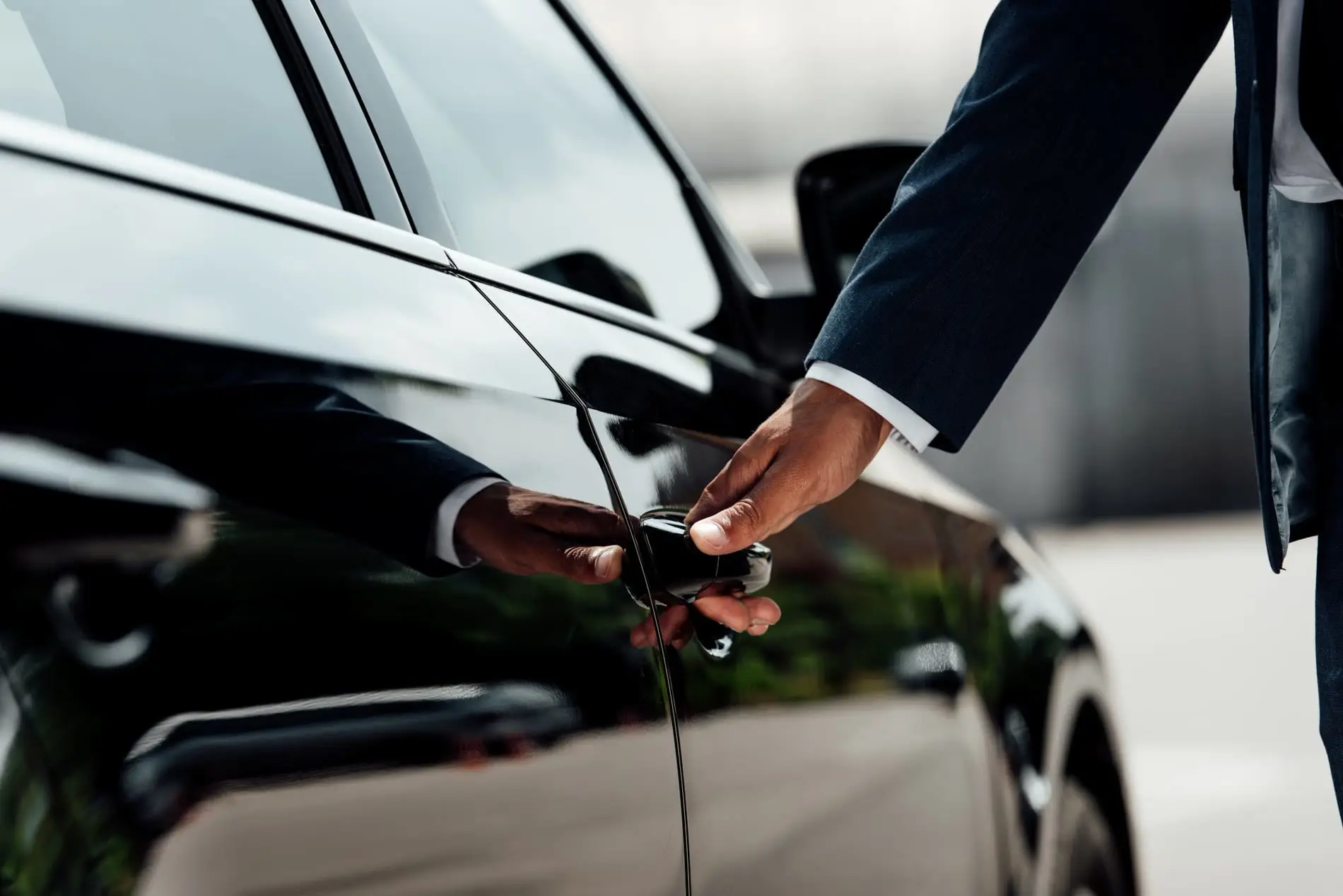
- Pickup from the hotel or another agreed location
- A professional driver dedicated to the booked route
- A sightseeing plan reviewed before the tour
- Waiting time while the family visits scheduled attractions
- Drop-off at the hotel or another agreed destination
- Reasonable schedule adjustments within the booked time
- Operations support when included by the tour provider
Attraction tickets, meals, accommodation, personal expenses, guide services, child seats, wheelchair rental and overtime may be separate unless they are specifically included in the written quotation. A private driver is also not automatically a tour guide. Families that want historical explanations, assistance inside attractions or a person to accompany them throughout the sightseeing experience should confirm whether a guide is included or available as an add-on.
Which families benefit the most?
Families with babies or toddlers
Traveling with very young children usually involves more than a stroller. Families may carry milk, snacks, diapers, extra clothes, blankets and toys. Children may need an unexpected meal, restroom stop or nap at exactly the time the itinerary says to transfer to another train.
A private vehicle gives parents a controlled place to regroup between attractions. The family can reduce the number of stops, take a longer lunch or return to the hotel earlier when necessary. Strollers and bags may be left in the vehicle when it is safe and appropriate to do so, reducing the need to carry everything through every location.
Child-seat reminder Request child seats before confirming the reservation and ask the operator to verify the child’s age, height or weight requirements, vehicle compatibility and availability. Do not assume that the correct seat will be available without advance notice.
Families traveling with grandparents
A multigenerational trip often includes very different energy levels. Younger family members may be ready for ten attractions, while grandparents may prefer fewer destinations, longer meals and more time to sit. A private vehicle makes it easier to plan one shared day without forcing everyone to move at the fastest person’s pace.
The main advantages are reduced station walking, fewer stairs and transfers, a temperature-controlled space between stops and the ability to shorten the itinerary. The vehicle cannot remove every step, however. Families should still review the walking surfaces, slopes, stairs and distances inside each attraction before finalizing the route.
Families of six to nine people
A larger family gains more value from one coordinated vehicle because the group stays together. There is no need to divide into several taxis, arrange separate meeting points or repeatedly count passengers at train doors. The total vehicle price is also shared among more travelers, making the cost per person easier to justify.
Passenger capacity must be considered together with luggage. A vehicle that can seat nine people may not comfortably carry nine passengers plus nine large suitcases. The operator should receive the exact number and approximate size of bags before recommending a vehicle.
Families with mobility requirements
Private transportation can reduce the walking required between the hotel, stations and attractions. It can be especially useful for guests with joint pain, limited stamina, sensitivity to heat or cold, or the need for frequent restroom breaks. Families should disclose wheelchairs, walkers and boarding limitations before booking so that vehicle access and storage can be checked.
A private tour is not the same as a fully accessible tour. Some historic temples, shrines, gardens and viewpoints still have stairs, slopes, gravel or long paths. The itinerary should be designed around what the traveler can comfortably do rather than simply replacing trains with a car.
Families visiting countryside destinations
Private vehicles are often most valuable when attractions are spread across one region and local transportation requires additional buses, transfers or waiting. Examples include Mount Fuji and Lake Kawaguchiko, Hakone, Nikko and locations outside the most central parts of Kyoto.
Public transportation can still work well for travelers visiting one main destination. The private-vehicle advantage becomes clearer when a family wants several stops, has limited time or needs a reliable place to rest between locations.
The main advantages for families
Door-to-door transportation
The day begins at the hotel or another agreed pickup point. This removes the first walk to the station and the final walk back after everyone is tired. It can be especially helpful during rain, summer heat, winter cold or arrival days with luggage.
Fewer transfers
A family can move from one attraction to the next without repeatedly changing trains, buses or platforms. Fewer transitions also reduce the chance of someone entering the wrong carriage, missing a connection or becoming separated in a crowd.
A pace built around the family
The schedule can be planned around children’s meals, grandparents’ energy and the group’s priorities. A family may choose four meaningful stops instead of rushing through seven. During the day, a stop can sometimes be shortened, skipped or replaced when traffic, weather or tiredness changes the plan.
Easier management of belongings
Jackets, shopping bags, strollers and non-valuable items may remain in the vehicle when permitted by the operator. This can make a major difference for a family that would otherwise carry everything through several stations and attractions. Valuable items, passports and essential medication should remain with the travelers.
One coordinated schedule
The driver and operations team work from one planned route. Pickup time, attraction order and return timing are decided before the day begins. This reduces the number of transport decisions parents must make while also managing the family.
The disadvantages families should understand
The price is higher
For a small family, individual train fares will usually cost less than reserving a vehicle and driver for the day. The private-tour price pays for exclusivity, waiting time, route coordination, vehicle capacity and door-to-door convenience. Families should compare the experience and workload, not only the transport fare.
Road traffic can change the schedule
Private transportation avoids train transfers but remains exposed to congestion, accidents, road closures and seasonal crowds. Weekends near Mount Fuji, peak foliage periods, cherry blossom season and major holidays can affect travel time. A realistic itinerary must include a return-time buffer.
Parking is not always at the entrance
A vehicle cannot always stop directly beside a temple, shopping street or viewpoint. Drivers must use permitted loading areas and parking facilities. Guests may still need to walk from the parking area, and some attractions have long internal routes even after the vehicle drops the group nearby.
A private tour has a fixed duration
A ten-hour booking includes hotel pickup, driving, traffic, meals, attraction visits, parking and the return journey. It does not provide ten full hours inside attractions. Adding a distant stop may require shortening another stop or approving overtime.
Families may miss part of the train experience
Using trains is one of the memorable parts of visiting Japan. Older children may enjoy navigating stations, riding local lines and using the Shinkansen. A family does not need to choose only one transportation style; private tours can be reserved for the most demanding days while trains remain part of the trip.
How much does a family private tour cost?
Most Nomad Diaries day tours focus on one primary destination. Kyoto-Nara and Mount Fuji-Hakone are selected combination routes with deliberately limited stops; they should not be interpreted as permission to combine any two or three regions in one day.
The following examples use the Nomad Diaries published rates. Japanese-yen prices are the official reference. Approximate US-dollar amounts use the Bank of Japan’s August 2026 reference rate of ¥161 to US$1 and are rounded for easier comparison. Exchange rates and final converted charges can change.
Kanto family day tours
| Tour | Published price | Approx. USD |
|---|---|---|
| Tokyo Day Tour | ¥100,000 | About US$620 |
| Mount Fuji Day Tour | ¥130,000 | About US$810 |
| Hakone Day Tour | ¥130,000 | About US$810 |
| Mount Fuji-Hakone Day Tour | ¥130,000 | About US$810 |
| Yokohama Day Tour | ¥110,000 | About US$685 |
| Nikko Day Tour | ¥140,000 | About US$870 |
Kansai family day tours
| Tour | Published price | Approx. USD |
|---|---|---|
| Osaka Day Tour | ¥140,000 | About US$870 |
| Kyoto Day Tour | ¥140,000 | About US$870 |
| Nara Day Tour | ¥140,000 | About US$870 |
| Kyoto-Nara Selected Combination Tour | ¥150,000 | About US$930 |
| Kobe Day Tour | ¥140,000 | About US$870 |
Pricing notice Rates may change according to the pickup location, travel date, vehicle availability, passenger and luggage requirements, itinerary, overtime and special arrangements. Attraction admission, meals, accommodation and personal expenses are not included unless stated in the final quotation. Confirm the current written rate before payment.
Is it worth the cost per person?
Looking at the full vehicle price can make a private tour feel expensive. For larger families, dividing the rate by the number of travelers provides a more useful comparison, although it still does not mean that a private tour will be cheaper than public transportation.
Example: family of four
A ¥130,000 Mount Fuji private tour is ¥32,500 per person, or roughly US$202 per person using the reference rate above. Public transportation may cost less, but the private option includes one coordinated vehicle, hotel pickup, waiting time at attractions, fewer transfers and easier management of a stroller or bags.
Example: family of seven
The same ¥130,000 tour is approximately ¥18,571 per person, or about US$115 per person. For a larger family, the convenience premium becomes easier to justify because the vehicle price is shared across more travelers and the group avoids splitting into multiple taxis or navigating every transfer together.
Value question The best comparison is not simply private-car fare versus train fare. Ask what the family would pay in money, time, walking, coordination and energy to complete the same day independently.
Private tour vs train for families
| Factor | Private tour | Train |
|---|---|---|
| Hotel pickup | Usually included as arranged | Not included |
| Transfers | Minimal between planned stops | May require several |
| Stroller convenience | Generally easier | Depends on stations and crowds |
| Luggage | Convenient when vehicle is sized correctly | Can be tiring during transfers |
| Rest and pacing | Flexible within booked time | Based on routes and timetables |
| Traffic risk | Yes | Usually lower |
| Small-family cost | Usually higher | Usually lower |
| Large-family coordination | One vehicle and schedule | Every traveler must navigate together |
| Countryside access | Often practical for several stops | May require local buses |
| Japan train experience | Limited on the tour day | A major part of the experience |
Private tour vs taxi for families
Taxis are useful when the family needs one short, direct ride: hotel to station, station to restaurant, a rainy evening trip or a return journey after the children become tired. A taxi normally completes one point-to-point journey, and its luggage capacity depends on the available vehicle.
A reserved private tour is designed around a full route. The driver waits during scheduled attraction visits, the vehicle is selected for the group, and the family receives one planned duration or quotation. For six to nine travelers, using several ordinary taxis throughout the day can be harder to coordinate than one private vehicle.
Is a private tour worth it in Tokyo?
Tokyo has an extensive train network, so a private tour is not automatically the best choice. Active families with older children, light bags and attractions located along one convenient route may enjoy trains more and spend less.
A private vehicle becomes more attractive when the family includes seniors or toddlers, plans to shop, wants hotel pickup, has mobility concerns or wants to connect districts that are far apart. Traffic conditions matter, and a driver cannot always drop guests directly at the attraction entrance.
Is a private tour worth it for Mount Fuji?
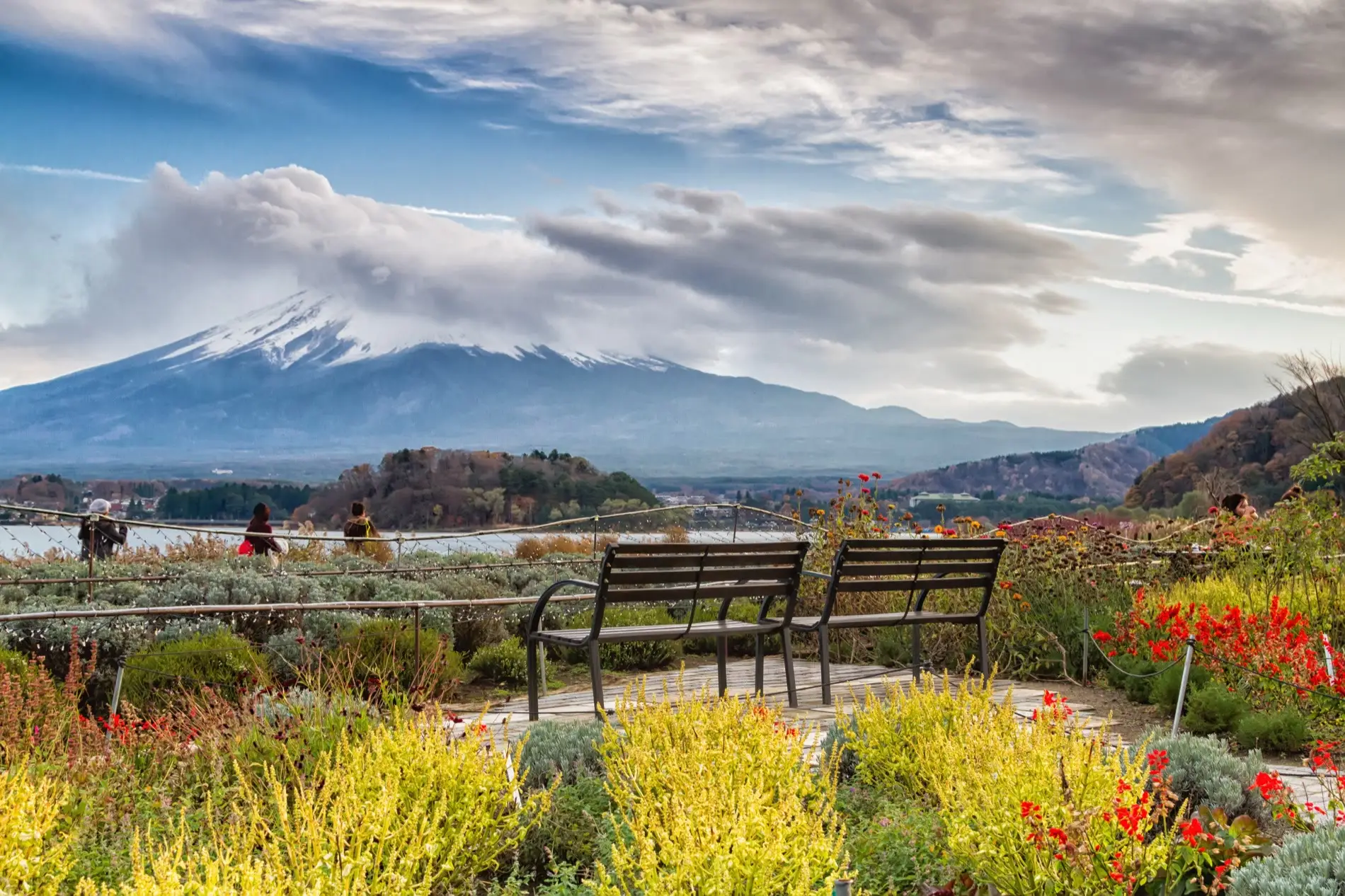
Mount Fuji is one of the clearest examples of where a private tour can provide strong family value. Reaching the wider Kawaguchiko area from Tokyo is possible by train or highway bus, but visiting several locations may also require local buses, waiting and careful timing.
With a private vehicle, a family can build one route around places such as Oshino Hakkai, Lake Kawaguchiko, a seasonal flower park, Chureito Pagoda, shopping stops and other viewpoints. The number of stops must remain realistic, especially during weekends and peak seasons. Mount Fuji visibility depends on weather and can never be guaranteed.
Is a private tour worth it in Kyoto?
Kyoto attractions are spread across different parts of the city, and many visitors rely on buses as well as trains. During cherry blossom and autumn foliage seasons, crowded transport and road congestion can both affect the day.
A private vehicle can reduce transfers and make a cross-city route easier for a family, but it does not eliminate walking inside Fushimi Inari, Kiyomizu-dera, Arashiyama or temple grounds. Parking and permitted drop-off areas also limit how close the vehicle can reach. A carefully selected four-stop route is usually more enjoyable than trying to cover every famous attraction in one day.
How much walking does a private tour remove?
A private tour mainly reduces transportation-related walking: hotel to station, station transfers, bus stops and walks between disconnected transport points. It does not remove the walking required to experience the attraction itself.
Families may still walk through temple grounds, gardens, parks, historic districts, shopping streets and observation areas. Before booking, share the traveler’s comfortable walking duration, use of a wheelchair or walker, stair limitations and need for regular seating. The itinerary can then prioritize accessible entrances, shorter routes and fewer stops.
How flexible is the itinerary?
Private-tour flexibility is valuable, but it must be understood realistically. Before the tour, the family can identify priority attractions and preferred pacing. During the day, the group may be able to stay longer at lunch, skip a stop, shorten an attraction visit or replace a location when the alternative fits the route and remaining time.
Flexibility does not mean unlimited overtime, illegal roadside stopping or adding a destination in another region. Road conditions, parking, attraction hours, booked duration and the driver’s operating limits still apply. The best itinerary is flexible inside a practical structure.
Sample family itineraries
Tokyo family day
| Approximate time | Example activity |
|---|---|
| 8:30 AM | Hotel pickup and route confirmation |
| 9:00 AM | Meiji Shrine or another calm morning stop |
| 10:45 AM | Shibuya area |
| 12:15 PM | Family-friendly lunch and rest |
| 2:00 PM | Asakusa |
| 4:00 PM | Tokyo Skytree area or a selected final stop |
| 6:30 PM | Hotel drop-off, subject to traffic |
Mount Fuji family day
| Approximate time | Example activity |
|---|---|
| 7:30 AM | Tokyo hotel pickup |
| 10:00 AM | Oshino Hakkai or first viewpoint |
| 11:30 AM | Lake Kawaguchiko |
| 12:45 PM | Lunch |
| 2:15 PM | Seasonal attraction or family-priority stop |
| 3:45 PM | Final viewpoint or shopping stop |
| 6:30-7:30 PM | Return to Tokyo, depending on traffic |
Kyoto multigenerational day
| Approximate time | Example activity |
|---|---|
| 8:30 AM | Hotel pickup |
| 9:00 AM | Fushimi Inari with a shortened walking plan |
| 10:45 AM | Kiyomizu-dera area, based on mobility |
| 12:30 PM | Lunch and rest |
| 2:00 PM | Kinkaku-ji |
| 3:45 PM | Arashiyama or a less demanding alternative |
| 6:00 PM | Hotel drop-off, subject to traffic |
These are planning examples, not guaranteed schedules. Actual timing depends on the hotel, date, traffic, weather, attraction hours, parking and the family’s pace.
When a private tour may not be worth it
A private tour is not necessary for every family. Public transportation may be the better choice when:
- The family is small, active and comfortable navigating independently
- Children are old enough to handle walking and station transfers
- The itinerary focuses on one compact district or one direct rail route
- The family has little luggage and no stroller or mobility equipment
- Keeping transportation costs low is the highest priority
- The journey connects major stations efficiently
- The family wants the spontaneity and experience of using Japan’s trains
Choosing trains does not mean sacrificing quality. It means matching the transport to the day. A family may use trains for central Tokyo, the Shinkansen between major cities and a private vehicle only for Mount Fuji, Kyoto, airport transfers or the most physically demanding sightseeing day.
A hybrid strategy is often the best value
Many families do not need a private car every day. A mixed transportation plan can provide the best balance between convenience and cost. Common combinations include:
- Shinkansen between Tokyo and Kyoto, followed by a private Kyoto day tour
- Trains for central Tokyo and a private vehicle for Mount Fuji
- Airport transfer on arrival day, then public transportation on free days
- A private tour on the day grandparents join the sightseeing program
- Taxis for short evening rides and private transportation for full-day multi-stop touring
Practical recommendation Use trains for simple, direct city-to-city journeys. Reserve a private vehicle for the days when door-to-door pickup, several scattered attractions, luggage, young children, senior travelers or mobility needs would materially improve the experience.
Questions families should ask before booking
-
What vehicle will be assigned, and what is its practical capacity with our luggage?
-
Are the driver and tour guide separate services?
-
Are child seats available, and what information is required to reserve them?
-
Can the vehicle store our stroller, wheelchair, walker or large suitcases?
-
Which charges are included: fuel, tolls, parking, overtime and pickup fees?
-
How many hours are included, and when does the booked time begin?
-
How many attractions are realistic for our route and travel date?
-
Can the itinerary be adjusted if children or grandparents become tired?
-
Where can the driver legally pick up and drop off at each attraction?
-
What happens during heavy rain, road closures or major traffic delays?
-
What is the cancellation and rescheduling policy?
-
Who should the family contact before and during the tour?
The final decision: is it worth it for your family?
A private tour is worth considering when it removes a meaningful burden from the trip. Young children, senior parents, mobility concerns, a larger group, several bags and destinations spread across one region all increase its value. The experience becomes less about navigating transportation and more about keeping the family comfortable and together.
For a small, active family traveling light on direct urban routes, Japan’s trains may be the better and more enjoyable choice. The strongest itinerary is not the one that uses a private vehicle every day. It is the one that uses each transportation option where it creates the greatest benefit.
Is a private tour right for your family? Every family travels differently. Share your dates, hotel, number of adults, children and seniors, luggage, mobility needs and preferred destinations. The Nomad Diaries team can review the route and recommend whether private transportation would genuinely make the journey easier. GET A FAMILY TOUR RECOMMENDATION EXPLORE JAPAN PRIVATE TOURS