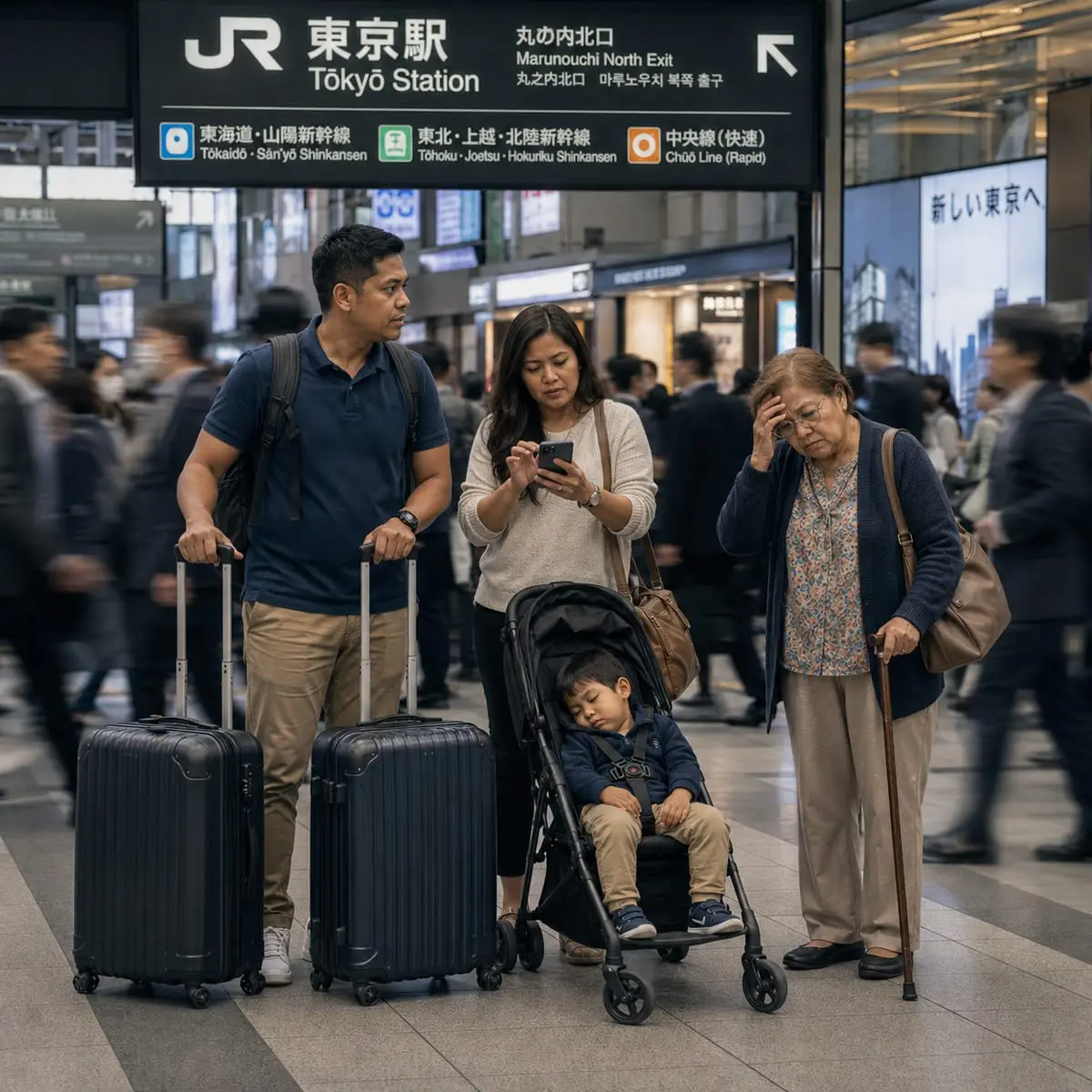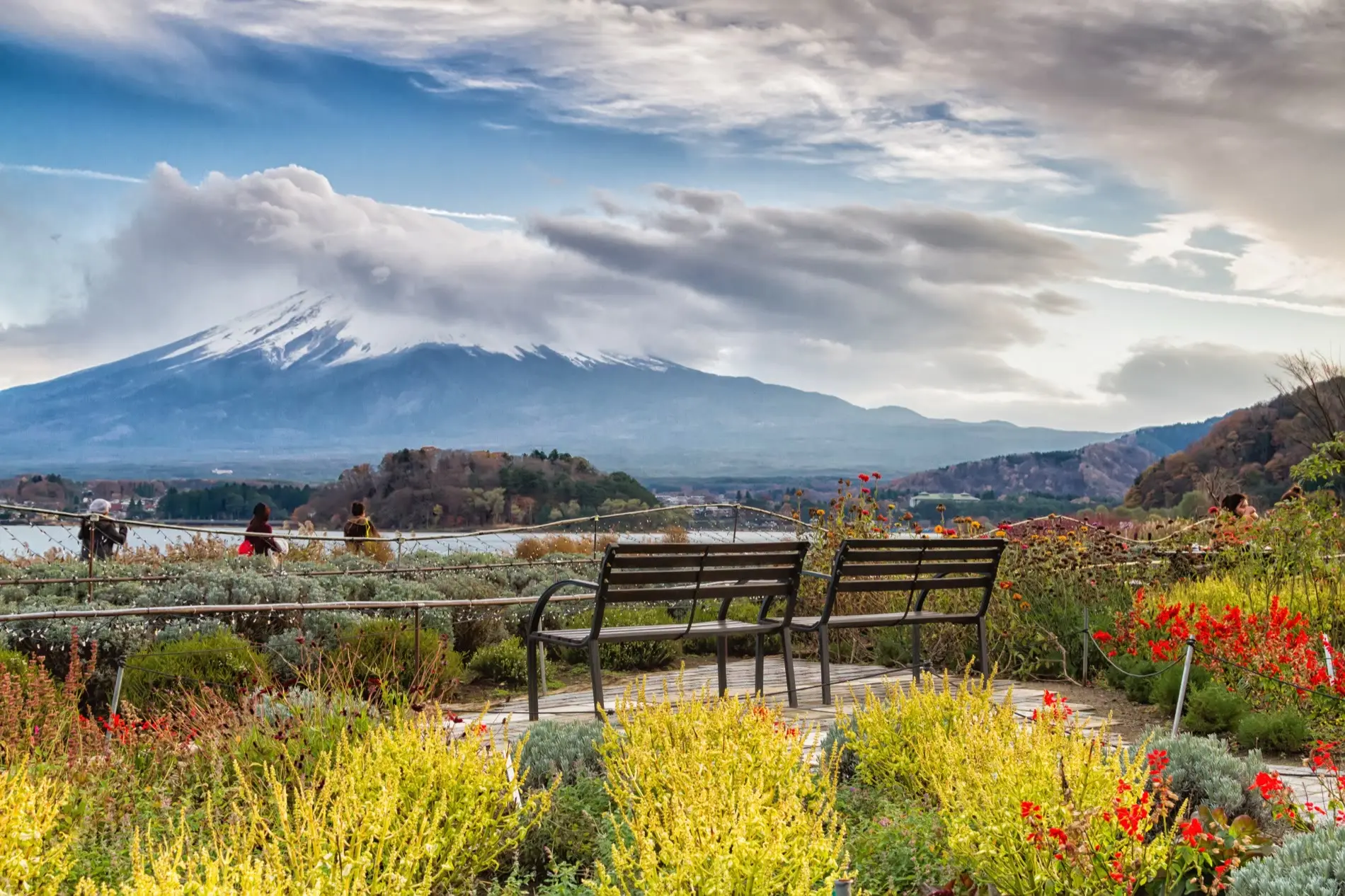
A private vehicle can make the trip easier for families, senior travelers and larger groups because the main viewpoints are spread across the area. It provides hotel pickup, space for personal belongings and fewer transfers between trains and local buses. It does not, however, eliminate traffic, walking inside attractions or the possibility that clouds may hide Mount Fuji.
Plan a Mount Fuji day trip around your family Share your Tokyo hotel, travel date, number of guests, mobility needs and preferred stops. Nomad Diaries will recommend a practical route and appropriate vehicle. PLAN YOUR MOUNT FUJI PRIVATE TOUR
Mount Fuji day trip: quick facts
| Detail | Practical guidance |
|---|---|
| Starting point | Tokyo hotel or another agreed pickup location |
| Typical private-tour duration | Around 10 hours, including the return to Tokyo |
| Practical road-travel estimate | Often about 2–3 hours each way, depending on pickup area and traffic |
| Recommended number of stops | Usually 3–5 well-chosen stops |
| Best for | Families, couples, seniors and private groups |
| Main first-time area | Lake Kawaguchiko, Oshino Hakkai and nearby viewpoints |
| Mount Fuji visibility | Weather-dependent and never guaranteed |
| Walking level | Adjustable, but individual attractions may still require significant walking |
| Other travel options | Fuji Excursion train, highway bus or a combination of rail and local transport |
| Ideal departure | Early morning, with the exact time based on hotel location and season |
Is a Mount Fuji day trip from Tokyo possible?
Yes. Mount Fuji can be visited as a day trip from Tokyo when the itinerary concentrates on one side of the mountain and leaves enough time for the return journey. The most common day-trip focus is the Fuji Five Lakes area, particularly Lake Kawaguchiko, Oshino Hakkai and viewpoints in Fujiyoshida.
The important planning point is that “Mount Fuji” is not one compact attraction. Lake Kawaguchiko, the Fuji Subaru Line Fifth Station, Hakone, Gotemba and the pagoda viewpoint are spread across different routes. Trying to cover too many of them can turn the day into a long drive with brief photo stops instead of a satisfying visit.
Direct answer for first-time visitors Choose one main area and three to five priority stops. Lake Kawaguchiko plus Oshino Hakkai is a practical base for a first visit. Add Chureito Pagoda, the Fifth Station, Gotemba or Hakone only after considering mobility, season and traffic.
How far is Mount Fuji from Tokyo?
Travel time varies according to the Tokyo pickup point, departure time, weekday or weekend, season, accidents, road restrictions and the specific Mount Fuji area being visited. From central Tokyo to the Lake Kawaguchiko area, a practical private-vehicle estimate is often around two to three hours each way. Peak weekends and seasonal congestion can take longer.
By rail, Fujikyu Railway lists the direct Fuji Excursion limited express from Shinjuku to Kawaguchiko at a fastest scheduled journey of approximately 1 hour 54 minutes. The train reaches Kawaguchiko efficiently, but travelers still need local buses, taxis or walking to visit multiple attractions around the lake and surrounding towns.
Example time allocation for a 10-hour private tour
| Tour component | Possible allocation |
|---|---|
| Tokyo to the Mount Fuji area | 2–3 hours |
| Sightseeing and lunch | Approximately 4–5 hours |
| Return to Tokyo | 2–3 hours |
| Traffic, boarding and parking allowance | Varies |
What is the best way to visit Mount Fuji from Tokyo?
The best option depends on budget, group size, luggage, mobility and how many locations you want to visit. Japan’s trains and highway buses are excellent for reaching the main area, while a private car becomes more useful when the day includes several scattered stops.
Highway bus
A highway bus can be a cost-effective option for solo travelers and couples visiting one central destination such as Kawaguchiko Station. It offers a direct trip from major Tokyo terminals, but departure times are fixed and the bus does not solve transportation between the individual attractions after arrival.
- Best for one main destination and a simple plan
- Usually lower cost than a private vehicle
- Fixed departure and return times
- May require local buses or taxis around Kawaguchiko
- Traffic can affect both the outbound and return journeys
Train
The direct Fuji Excursion train is attractive for independent travelers because it connects Shinjuku and Kawaguchiko without a transfer on its direct services. Fujikyu Railway currently lists four regular round trips each day, with some seasonal additional trains. Reserved seating and schedule availability should be checked for the intended travel date.
- Avoids expressway traffic
- Convenient from Shinjuku
- Useful for travelers staying near major stations
- Requires onward local transport for multiple attractions
- Less flexible when the group needs unscheduled rest or meal stops
Private car
A private car is designed around the group rather than a public timetable. The driver collects the guests from the hotel, follows a pre-arranged route and waits while the group visits each attraction. It is particularly valuable when the party includes children, senior parents, mobility limitations or several passengers who want to remain together.
- Door-to-door pickup and drop-off
- Several stops can be coordinated in one route
- Belongings may remain in the vehicle when safe and appropriate
- The itinerary can be shortened when the group becomes tired
- Higher cost and exposure to road congestion
Balanced recommendation Use the train or highway bus when your priority is reaching one main area at the lowest practical cost. Consider a private car when the value comes from hotel pickup, group coordination, several viewpoints and a pace adjusted for children or senior travelers.
Best stops for a Mount Fuji day trip
The best route is not the route with the greatest number of stops. It is the route that fits the weather, season and physical ability of the group. The following locations are common options, but not all should be combined automatically.
Oshino Hakkai
Oshino Hakkai is a historic village area known for its clear spring ponds, traditional scenery, local food stalls and potential Mount Fuji views. It gives the day a cultural element rather than making every stop only a viewing platform.
- Allow approximately 45–60 minutes for a comfortable first visit
- Expect crowds during popular seasons and weekends
- Some paths and busy areas may be uncomfortable for guests with limited mobility
- The central commercial pond is not itself one of the original eight springs
- Build in time for snacks, restrooms and family photographs
Lake Kawaguchiko
Lake Kawaguchiko is one of the most recognizable Mount Fuji viewing areas and a strong base for a first-time day trip. The lake is large, so it should be planned as a specific lakeside stop rather than treated as one small attraction. Different shores and parks provide different views, facilities and walking conditions.
Oishi Park
Oishi Park sits on the northern shore of Lake Kawaguchiko and is popular for the combined view of the lake and Mount Fuji. It is often suitable for families and seniors because the main lakeside area can be enjoyed without a steep climb. Seasonal flowers add foreground color, but the exact blooms and timing depend on the month and weather.
Chureito Pagoda and Arakurayama Sengen Park
The famous viewpoint combines Mount Fuji, the five-storied pagoda and the city below. It is one of the area’s best-known photographs, but it is not a low-walking stop. The official Fujiyoshida travel guide states that the observation deck is reached by a 398-step hike. It should not be automatically included for guests with knee pain, limited stamina or serious mobility concerns.
Mobility warning A private vehicle can reduce transportation-related walking, but it cannot remove the 398-step climb to the iconic observation deck. During cherry-blossom congestion, vehicles may also face temporary access restrictions and visitors may need to walk farther from designated parking or drop-off areas.
Fuji Subaru Line Fifth Station
The Fuji Subaru Line Fifth Station provides a higher-elevation perspective and is associated with the Yoshida climbing route. Access depends on the season, road conditions and vehicle restrictions. Adding it to a Kawaguchiko itinerary can reduce the time available for lakeside stops, so it should be included for a clear reason rather than simply because it appears on a list.
Seasonal flower and nature stops
Flower parks and lakeside gardens can make the itinerary more memorable in spring, early summer and autumn. The attraction should be matched to the actual travel date. Avoid promising lavender, cherry blossoms or autumn colors without checking current seasonal conditions.
Gotemba Premium Outlets
Gotemba Premium Outlets is a major shopping complex on the Shizuoka side of Mount Fuji. It works best for families who genuinely want a shopping-focused day. Because the center has hundreds of stores and restaurants, a brief “quick shopping stop” can easily become several hours. Combine it with one or two scenic locations rather than a full Kawaguchiko route.
Recommended 10-hour Mount Fuji itinerary
The following schedule is a planning model for a first-time family. Exact pickup and return times must be adjusted to the hotel location, traffic forecast, attraction conditions and the group’s pace.
| Time | Stop | Planning guidance |
|---|---|---|
| 7:30 AM | Tokyo hotel pickup | An early departure reduces the risk of losing the morning to outbound traffic and gives the team more flexibility if the route needs to change. |
| 10:00 AM | Oshino Hakkai | Explore the spring ponds, village atmosphere and food stalls. Suggested visit: approximately 45–60 minutes. |
| 11:30 AM | Lake Kawaguchiko or Oishi Park | Enjoy a lakeside viewpoint and seasonal scenery. Suggested visit: approximately 45–60 minutes. |
| 12:30 PM | Lunch and rest | Allow enough time for restaurant waiting, restrooms, children and senior travelers. A rushed lunch often affects the rest of the tour. |
| 1:45 PM | Family-selected attraction | Choose one attraction based on the season and interests: an additional viewpoint, cultural attraction, ropeway area or relaxed park. |
| 3:15 PM | Final viewpoint or short shopping stop | Keep this stop flexible. If traffic has increased, removing a lower-priority stop is usually better than rushing. |
| 4:00 PM | Depart for Tokyo | The departure time may need to move earlier on peak weekends, holidays or during poor road conditions. |
| 6:30–7:30 PM | Estimated hotel arrival | Arrival is an estimate. Overtime and itinerary changes should follow the confirmed quotation and operating policy. |
Why the itinerary is deliberately simple A family usually remembers a comfortable lunch, enough time for photographs and a relaxed lakeside walk more positively than a day spent repeatedly entering and leaving the vehicle. Three or four meaningful stops are often better than six rushed ones.
Alternative itineraries for different travelers
Family-friendly itinerary
Prioritize Oshino Hakkai, Lake Kawaguchiko, Oishi Park and one child-friendly attraction. Keep climbing and long shopping sessions optional. Allow additional time for snacks, restrooms and naps inside the vehicle.
Senior-friendly itinerary
Choose vehicle-accessible viewpoints, a relaxed lunch and fewer stops. A suitable route may include a shortened Oshino Hakkai visit, a lakeside viewpoint, Oishi Park and a scenic drive or easy shopping stop. Chureito Pagoda should only be included when the travelers can comfortably manage the climb.
Photography-focused itinerary
Photography groups often need more time at each viewpoint and may want to react to changing light or clouds. Plan fewer locations and identify alternatives in advance. Chureito Pagoda, Oshino Hakkai, Lake Kawaguchiko and a seasonal foreground can form a strong route, but attempting all of them during peak traffic may still require compromises.
Shopping-focused itinerary
Use one or two scenic Mount Fuji stops before traveling to Gotemba Premium Outlets. Describe this accurately as a Mount Fuji-and-shopping day, because shopping is likely to become the main time commitment.
Relaxed three-stop itinerary
1. Oshino Hakkai
2. Lake Kawaguchiko
3. Oishi Park or another easy lakeside viewpoint
This is often the most suitable pattern for grandparents, toddlers, guests who dislike rushing and families arranging a professional photo session.
Can you visit Mount Fuji and Hakone in one day?
Technically, yes—but it is a broader driving day. Mount Fuji and Hakone can be combined when travelers understand that they will receive an overview of both areas rather than an in-depth visit to either. The route contains more driving, fewer stops and greater exposure to traffic, weather and operating disruptions.
- Leave Tokyo early
- Choose only the highest-priority stops in each area
- Expect the plan to change when traffic or weather deteriorates
- Avoid the combination for travelers who need a very slow pace
- Consider separate days when traveling with young children or senior parents
Recommended approach For a first family visit, a dedicated Mount Fuji day is usually more enjoyable. A combined Fuji–Hakone route works better for travelers who value variety over time at each attraction.
Can you see Mount Fuji all year?
Mount Fuji is present throughout the year, but it is not visible every day. Clouds, haze, rain and fast-changing mountain weather can partially or completely hide it even when central Tokyo appears clear. No responsible tour operator can guarantee an unobstructed view.
Cooler seasons and early mornings often provide clearer conditions, while summer can bring more haze and cloud formation. These are general tendencies, not promises. The route should still be enjoyable when the mountain is hidden.
What happens when Mount Fuji is hidden?
- Continue with cultural, lakeside and village attractions
- Change the order of stops when a clearer window appears practical
- Use alternative viewpoints without driving excessively
- Include a comfortable lunch or shopping stop
- Keep the family’s overall experience more important than chasing clouds around the region
Suggested website policy wording Mount Fuji visibility is weather-dependent and cannot be guaranteed. Cloud cover alone does not normally cancel the tour. The itinerary may be adjusted when practical, while safety, road conditions and the confirmed booking terms remain the priority.
Best season for a Mount Fuji day trip
| Season | Why travelers choose it | Planning considerations |
|---|---|---|
| Winter | Frequently crisp scenery, snow-covered mountain appearance and dramatic photographs. | Cold temperatures, shorter daylight, snow or icy roads and possible access restrictions. |
| Spring | Cherry blossoms and other seasonal flowers, with generally pleasant sightseeing temperatures. | Peak crowds, variable bloom timing and congestion around famous photo locations. |
| Summer | Green landscapes, longer daylight and access related to the official climbing season. | Heat, humidity, haze, clouds and heavy demand during school holidays. |
| Autumn | Colorful foliage, comfortable temperatures and scenic lakeside views. | Weekend traffic and variable foliage timing; popular locations can become crowded. |
Mount Fuji with children
A private Mount Fuji tour is often valuable for families because the attractions are spread across the region. Children can rest during the drive, and the route can be shortened when their energy changes. The day still requires preparation because temperatures, walking and traffic can differ from central Tokyo.
- Bring drinks, snacks and any necessary medication
- Confirm the child-seat requirement and availability before booking
- Report the stroller size so vehicle storage can be checked
- Avoid a schedule built around too many adult photo stops
- Plan regular restroom breaks and a proper lunch
- Carry layers because the mountain area can feel cooler than Tokyo
Mount Fuji with elderly parents
The most useful benefit of a private vehicle for senior travelers is the reduction in station transfers and transportation-related walking. The route should be created around the guests’ real mobility—not only their age.
- Choose viewpoints with easier vehicle access
- Avoid steep stairs unless the traveler specifically approves them
- Plan fewer stops with longer rest periods
- Allow additional time for boarding and restroom visits
- Disclose wheelchairs, walking aids, knee pain and heat sensitivity
- Keep medication and warm layers accessible inside the vehicle
Important expectation A private tour reduces unnecessary walking between transport connections. It does not eliminate walking through villages, parks, shrines, shopping areas or viewpoints.
How much walking is required?
| Attraction | General level | Main concern |
|---|---|---|
| Oishi Park | Low to moderate | Open outdoor pathways; distance depends on how much of the park the group explores. |
| Lake Kawaguchiko viewpoints | Low to moderate | Varies greatly by the selected shoreline stop. |
| Oshino Hakkai | Moderate | Crowds, standing time and some uneven or busy walking areas. |
| Chureito Pagoda viewpoint | High | Official route includes a 398-step climb to the observation deck. |
| Fuji Subaru Line Fifth Station | Low to moderate | Altitude, weather and seasonal access conditions. |
| Gotemba Premium Outlets | Moderate to high | A large shopping center where total walking increases quickly. |
What should travelers bring?
- Comfortable walking shoes
- Layered clothing and a light jacket
- Water and child-friendly snacks
- Rain protection
- Sun protection and a small towel in warmer months
- Medication and mobility aids
- Portable phone charger
- Cash and payment cards
- A compact bag that is easy to carry at attractions
Keep essential medication, child supplies and valuables in a small personal bag rather than deep inside larger luggage. Report large suitcases in advance because the practical passenger capacity of the vehicle depends on both people and bags.
How traffic changes the itinerary
A private car removes train transfers, but it does not remove traffic. Weekends, public holidays, cherry-blossom season, autumn foliage, Golden Week, school holidays, accidents, snow and heavy rain can all change the route.
- Leave Tokyo early
- Rank attractions as must-see, preferred and optional
- Avoid scheduling a time-sensitive Tokyo reservation immediately after the tour
- Expect the final stop to be the first one removed when the day is delayed
- Approve overtime only under the confirmed booking policy
Operations principle When traffic becomes heavier than expected, removing a lower-priority stop is usually safer and more enjoyable than rushing each attraction or returning to Tokyo far beyond the planned time.
How much does a Mount Fuji private tour cost?
Nomad Diaries publishes its Mount Fuji services in Japanese yen. The yen amount should remain the official reference price. US-dollar figures are shown only to help international travelers compare the approximate cost.
| Service | Published yen price | Approximate USD |
|---|---|---|
| Mount Fuji Day Tour | ¥130,000 | About US$810 |
| Mount Fuji–Hakone Day Tour | ¥130,000 | About US$810 |
Currency notice Japanese-yen prices are the official reference prices. The US-dollar estimate uses the Bank of Japan’s August 2026 reference rate of ¥161 per US$1 and is rounded for readability. The final converted amount may differ according to the live exchange rate and payment provider used at the time of payment.
The final quotation may also depend on pickup area, date, vehicle availability, group size, luggage, overtime, guide or photographer requests, child-seat needs, wheelchair arrangements and special routing. Attraction tickets, meals, accommodation and personal expenses are not included unless specifically stated in the confirmed quotation.
How the price feels when shared by a group
| Group size | ¥130,000 divided by group | What this means |
|---|---|---|
| 4 travelers | ¥32,500 per person | Higher than public transport, with door-to-door convenience. |
| 7 travelers | About ¥18,571 per person | The shared value becomes easier to compare for a large family. |
| 9 travelers | About ¥14,444 per person | Vehicle and luggage capacity must still be confirmed. |
Is a private Mount Fuji tour worth it?
It is most likely worth it when the family values convenience, coordination and several stops more than the lowest possible transport cost. The value is strongest for larger groups, families with young children, senior travelers, guests with strollers or mobility needs and visitors who want hotel pickup.
A private tour is more likely to be worthwhile when:
- The group has children or senior parents
- Six to nine people want to travel together
- The plan includes several viewpoints and attractions
- The group needs flexible rest and meal breaks
- Strollers, shopping bags or personal items must be managed
- The travelers prefer door-to-door service
Public transportation may be better when:
- The traveler is alone or part of a couple
- Budget is the main priority
- The plan is only to visit Kawaguchiko Station and one nearby area
- Everyone is comfortable navigating trains, buses and walking
- The group does not need hotel pickup or a flexible pace
Common Mount Fuji day-trip mistakes
1. Leaving Tokyo too late.
2. Treating Mount Fuji as one compact attraction.
3. Trying to cover Kawaguchiko, Hakone and Gotemba extensively in one day.
4. Planning too many stops and too little lunch time.
5. Assuming Mount Fuji will always be visible.
6. Adding Chureito Pagoda without checking the group’s mobility.
7. Ignoring return traffic into Tokyo.
8. Forgetting that mountain-area temperatures can differ from Tokyo.
9. Failing to request child seats or disclose stroller size.
10. Comparing tours only by price without checking duration and inclusions.
11. Not reporting luggage, wheelchairs or walking limitations in advance.
12. Booking an inflexible evening commitment immediately after the tour.
Plan a Mount Fuji day trip that fits your group
A successful Mount Fuji day trip is not created by adding every famous attraction. It comes from choosing the right stops for the season, group size, mobility and preferred pace—and leaving enough time to enjoy them.
Get a realistic Mount Fuji tour recommendation Send your travel date, Tokyo hotel, number of adults, children and seniors, luggage count, mobility requirements and priority attractions. Nomad Diaries will recommend a practical route and suitable vehicle. GET A MOUNT FUJI TOUR RECOMMENDATION
Information to include in your inquiry
- Travel date
- Tokyo hotel or pickup area
- Number of adults, children and seniors
- Number and size of suitcases
- Stroller, wheelchair or mobility requirements
- Preferred Mount Fuji attractions
- Need for a child seat, guide or photographer
- Email and WhatsApp/Viber contact
About this guide Transport timetables, access restrictions, road arrangements, prices and attraction hours change seasonally. We confirm them for your actual travel date, including Fifth Station access and cherry-blossom traffic measures.