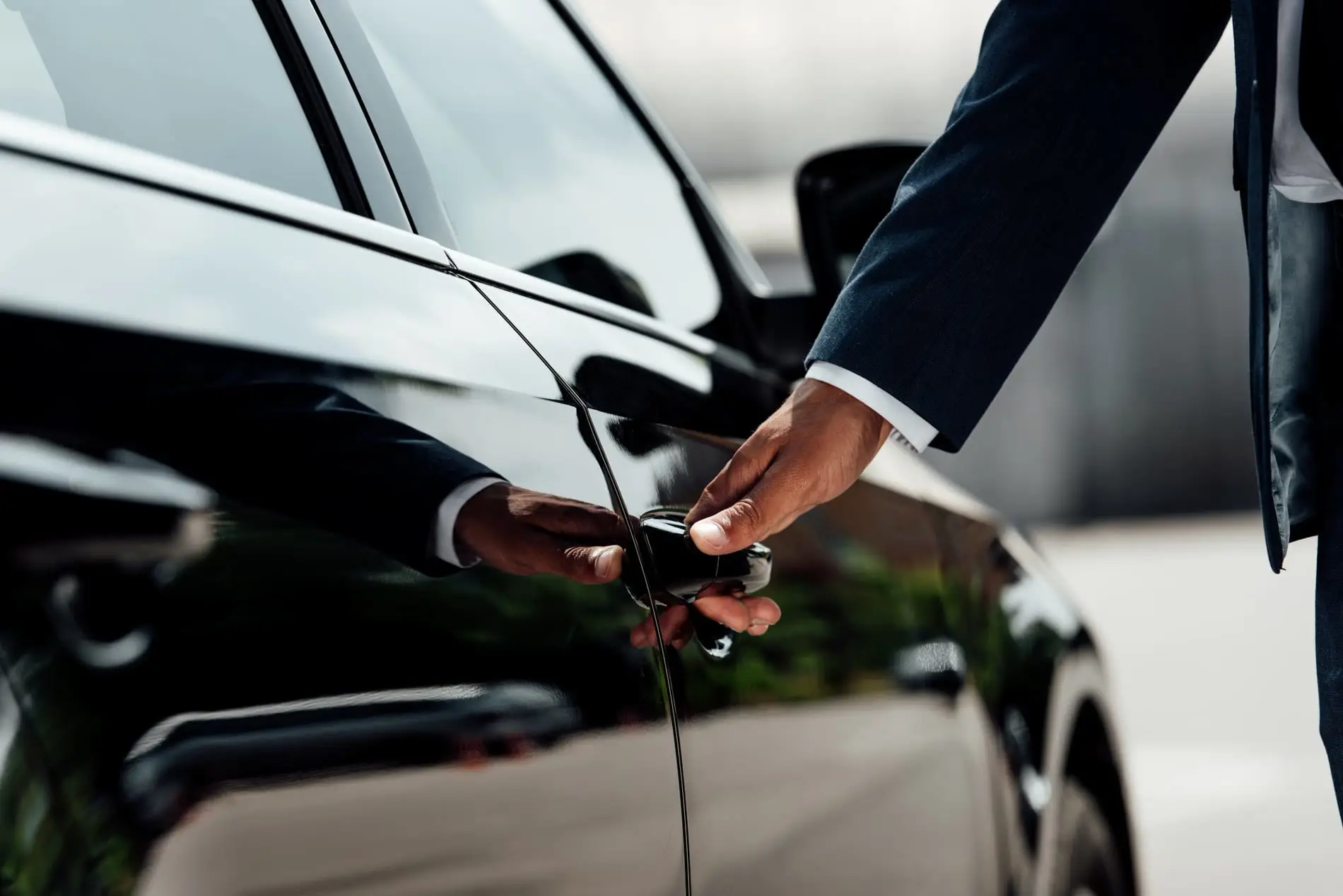
Taxis are most useful for short point-to-point trips, but they can become expensive or inconvenient for a full day with multiple stops.
Japan is famous for its public transportation, and for good reason. Trains make many journeys fast, predictable and affordable. However, a transportation system can be excellent without being the best fit for every traveler, every route or every day of a trip.
The right choice depends on more than the fare. Group size, luggage, walking ability, transfers, children, weather, traffic, destination layout and the value of having one coordinated schedule all affect the experience. This guide compares private cars, trains and taxis honestly so you can choose the option that fits your group rather than forcing the whole trip into one style of transportation.
At a glance: private car vs train vs taxi
| Factor | Private car | Train | Taxi |
|---|---|---|---|
| Door-to-door pickup | Usually yes | No | Yes |
| Dedicated to your group | Yes | No | Yes for each ride |
| Full-day multi-stop touring | Very suitable | Depends on route | Usually costly |
| Large luggage | Convenient when vehicle is sized correctly | Can be tiring or restricted | Limited by taxi size |
| Families with children | Very convenient | Efficient but can be tiring | Good for short trips |
| Senior travelers | Reduces transfers and walking | May require long walks and transfers | Useful for short direct rides |
| Countryside attractions | Often practical | Depends on local services | Possible but costly |
| Schedule flexibility | High within the booked time | Based on timetables | High per journey |
| Exposure to road traffic | Yes | Usually low | Yes |
| Long-distance city travel | Sometimes | Usually best by Shinkansen | Rarely practical |
Is Japan’s train system enough for most travelers?
For many visitors, yes. Japan’s rail network is extensive, and major cities are connected by frequent services. A traveler who is comfortable reading station signs, using navigation apps and walking between platforms can complete most of a first Japan trip without hiring a private vehicle.
Trains are especially effective when the journey begins and ends near a station. They are also the usual choice for traveling between distant major cities, such as Tokyo and Kyoto, because road travel takes much longer and is exposed to traffic. For solo travelers and couples with light luggage, public transportation often offers the best balance of speed and cost.
Who usually does well with trains?
- Solo travelers and couples
- Travelers staying close to major stations
- Guests with one small suitcase or backpack
- Visitors comfortable navigating independently
- Budget-conscious travelers who do not mind walking
- People traveling directly between large cities
- Guests who prefer fixed schedules and predictable arrival times
The difficult part is often outside the train
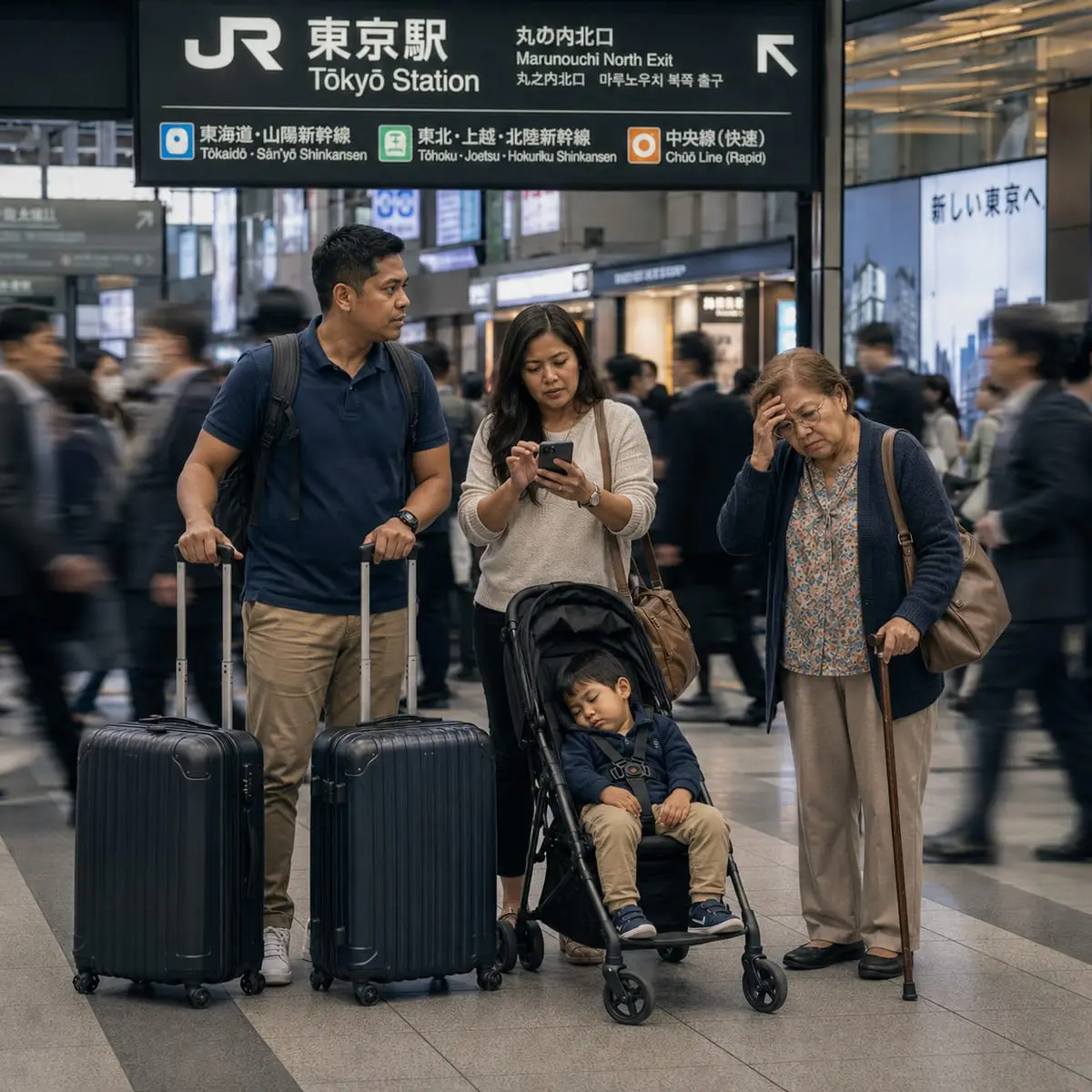
The ride itself may be easy. The harder part can be reaching the station, finding the correct entrance, walking through a large interchange, changing platforms, taking a bus after the train and then walking again to the attraction. A route that looks simple on a map may include several levels, long corridors and station exits located far from one another.
This extra movement matters more when the group includes small children, elderly parents, wheelchair users or several pieces of luggage. It also matters during rain, summer heat and peak travel periods, when crowded platforms and station passages can make a straightforward route feel much more demanding.
Practical rule Choose trains when the route is direct, the stations are convenient and everyone in the group can comfortably manage the walking and transfers. Consider a private vehicle when the route requires several connections or the group needs a slower, more controlled pace.
When is a private car better than taking trains?
A private car becomes more valuable when transportation is not only about moving from point A to point B. It can organize a full day around the group, carry belongings between stops and reduce the number of transitions. The benefit is usually strongest for people who would otherwise spend much of the day managing logistics.
Families with young children
Traveling with children usually means carrying more items, making more unplanned stops and adapting the schedule more frequently. A stroller may need to be folded on crowded transport. Children may become tired between attractions, need a restroom suddenly or fall asleep before the next planned stop.
A private vehicle gives the family one consistent base throughout the day. Coats, shopping bags and other belongings can remain in the vehicle when safe and permitted. Children can rest during longer drives, and parents do not need to move the whole family through several stations each time the itinerary changes.
Families should confirm child-seat requirements in advance. The number of children, their ages and the requested seat type can affect vehicle capacity and availability.
Travelers with elderly parents
Senior travelers often enjoy Japan more when the itinerary protects their energy. A private car can reduce walking between the hotel, station, platforms, bus stops and attraction entrances. It also provides a place to sit, cool down or warm up between stops.
However, a private vehicle cannot eliminate all walking. Many temples, shrines, gardens and viewpoints have slopes, steps, gravel paths or restricted vehicle access. The best result comes from combining direct transportation with a realistic number of stops and attractions that match the traveler’s mobility.
Larger private groups
A group of six to nine travelers may find that the challenge is coordination rather than the train fare. Everyone must pass through ticket gates, board the same carriage, transfer at the same station and agree on meeting points. One person stopping for the restroom or taking the wrong exit can delay the entire group.
A correctly sized vehicle keeps the group together. It also creates one schedule for the day rather than several individuals making separate decisions at each transfer. This can be particularly helpful for extended families, corporate groups and friends who want to spend the day together rather than continually regrouping.
Travelers with luggage
Large luggage changes the transportation calculation. Even when a train allows luggage, moving suitcases through stations, stairs, elevators and crowded carriages can be tiring. A taxi may not fit the passengers and bags in one vehicle, which can split the group and create two separate arrival times.
A private transfer is often the simplest option between an airport and hotel, provided the vehicle is chosen based on both passenger count and baggage. Always declare the number and approximate size of suitcases. A vehicle that can seat nine people may not safely carry nine people plus nine large bags.
Countryside and multi-stop day trips
Private transportation is especially useful when attractions are spread across a region. A train may reach the general destination, but local buses, infrequent connections or additional taxis may still be required. The more stops the group wants to visit, the more time can be lost waiting and transferring.
Mount Fuji and Lake Kawaguchiko, Hakone, Nikko and some parts of rural Kyoto are common examples. Public transportation can still work well, but a private car makes it easier to connect several places in one day and adjust the order based on weather, traffic or guest energy levels.
Travelers with limited time
A private vehicle can reduce the time spent understanding each new transfer and walking between stations. This does not mean it is always faster. Road traffic may be slower than trains, particularly in central Tokyo or during major holidays. The advantage is often a simpler, continuous day rather than guaranteed speed.
When are trains the better choice?
A trustworthy transportation recommendation should say when a private car is unnecessary. In many situations, trains are the clearer choice.
Long-distance travel between major cities
For routes such as Tokyo to Kyoto or Tokyo to Osaka, the Shinkansen is usually more efficient than a road vehicle. A private car would spend many hours on highways and could encounter traffic. The train allows the group to arrive in the next city sooner and begin the local part of the itinerary with more energy.
Compact urban routes
If several attractions are concentrated around one railway line or within a walkable district, trains can be fast and convenient. Central Tokyo has many areas where the station is close to the main sights. In these cases, a private vehicle may spend time in traffic or searching for legal pickup and parking areas while the train moves directly between districts.
Solo travelers and couples with light bags
The cost of a private vehicle is shared by the group. For one or two travelers, the convenience may still be worthwhile, but public transportation is generally more economical. Travelers who can carry their own bags and do not need mobility support may prefer to spend the savings on accommodation, food or experiences.
Peak traffic periods
Trains are often more reliable when roads are heavily congested. Central-city rush hours, holiday traffic, major events and seasonal crowds near popular destinations can make road travel unpredictable. A well-planned private tour should account for these conditions, but there are days when rail remains the faster option.
Best-use principle Use trains for long-distance city-to-city travel. Use a private vehicle for local touring, airport transfers, families with mobility or luggage needs and routes with several scattered attractions.
When should travelers use a taxi?
Taxis fill the gap between walking and a full private-car service. They are convenient for short, direct journeys and can be useful when the group is tired, the weather is poor or the destination is not close to a station.
Good situations for a taxi
- Hotel to station or station to hotel
- Station to an attraction that is inconvenient by bus
- A late-night trip after trains have stopped
- A short ride with tired children or senior travelers
- A sudden change in plans
- A direct trip when the group has only small bags
When a taxi becomes less practical
A regular taxi is normally hired one trip at a time. If the group wants a full day with several attractions, the cost and coordination can grow quickly. The taxi may not wait during every attraction, and another vehicle may need to be requested later. Large groups may require two or more taxis, which can separate the group and create different routes or arrival times.
For a single short journey, a taxi may be ideal. For a planned sightseeing day with several stops, a reserved private vehicle is usually easier to manage.
Private car vs taxi: what is the difference?
| Private tour vehicle | Regular taxi |
|---|---|
| Reserved in advance for a defined service | Usually booked for one journey |
| Planned around a multi-stop itinerary | Primarily point-to-point transport |
| The same vehicle supports the confirmed tour | A new taxi may be needed later |
| Driver waits or returns to an agreed pickup point | The ride usually ends on arrival |
| Vehicle is selected for group and luggage needs | Vehicle depends on availability |
| May include itinerary coordination and operations support | Usually transportation only |
| Quoted by route, duration and service conditions | Normally metered or fixed per trip |
The distinction matters because travelers sometimes compare a full-day private-tour price with the cost of one short taxi ride. They are not equivalent services. A full-day quotation includes the time in which the vehicle remains assigned to the group, even while guests are visiting attractions.
Which option is cheaper?
Trains are usually cheaper for one or two people on direct routes. A private car generally costs more in total, but the comparison changes as the group becomes larger or the itinerary requires several local buses and taxis. The real question is not only, “Which fare is lower?” It is also, “What level of convenience, coordination and physical effort does the group need?”
Example: a family of seven on a sightseeing day
| Train-based day | Private-car day |
|---|---|
| Seven individual fares and possible bus or taxi connections | One vehicle and one coordinated route |
| Several station entrances, exits and transfers | Hotel pickup and return |
| Stroller, bags and children move through every transfer | Belongings remain together in the vehicle when permitted |
| The group follows fixed departure schedules | Stops can be shortened or adjusted within the booked time |
| Lower direct transport cost in many cases | Higher total price but greater convenience and privacy |
A private car should not be advertised as automatically cheaper. Its value is usually found in time management, comfort, privacy, reduced walking and the ability to keep the group together. For a group that does not need those benefits, trains may provide better value.
Costs travelers sometimes forget to compare
- Taxi rides from stations to attractions
- Bus tickets and local connections
- Luggage delivery or storage
- Time spent waiting for the next service
- The physical effort of carrying bags through stations
- The risk of losing sightseeing time when the group separates
Private car vs train for Tokyo sightseeing
Tokyo has one of the world’s most useful urban rail networks. For independent travelers, trains are often the fastest way to move between well-connected neighborhoods. A day focused on areas such as Shibuya, Harajuku and Shinjuku may work very well by train, especially when the group is small and comfortable walking.
A private car can still be useful when the itinerary crosses several distant districts, the group includes seniors or children, or the day involves shopping and many bags. Hotel pickup also removes the first and last station journey. The trade-off is traffic and the fact that vehicles cannot always stop directly beside crowded attractions.
Choose trains in Tokyo when:
- The group is small and mobile
- The attractions are near stations
- The route stays along a simple rail corridor
- Traffic is expected to be heavy
- The travelers are comfortable walking and navigating independently
Choose a private car in Tokyo when:
- The group includes young children or elderly parents
- Several districts are spread across the city
- The travelers plan to shop and carry many bags
- The group wants hotel pickup and one coordinated schedule
- Mobility limitations make repeated station transfers difficult
Private car vs train for Mount Fuji
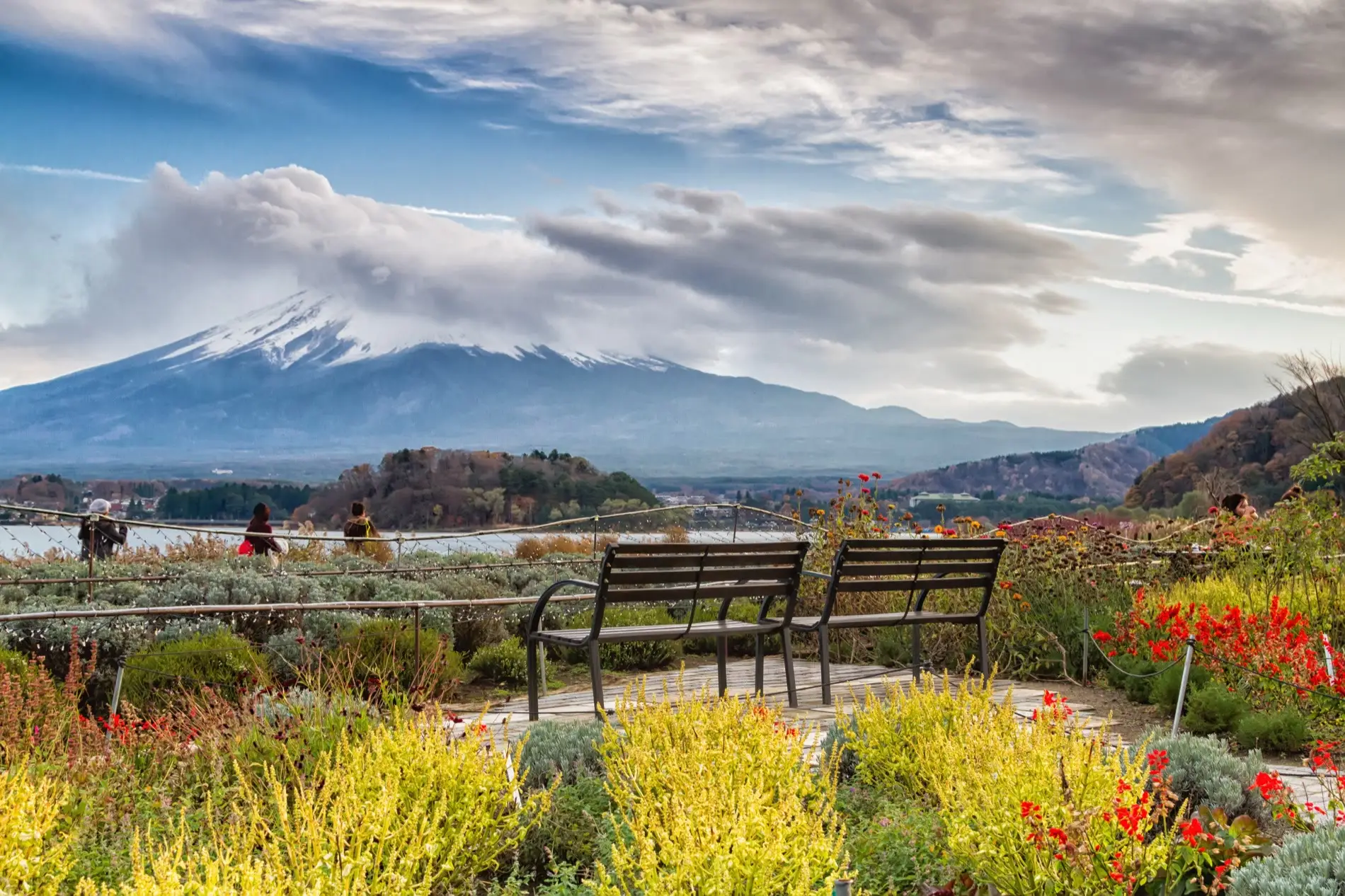
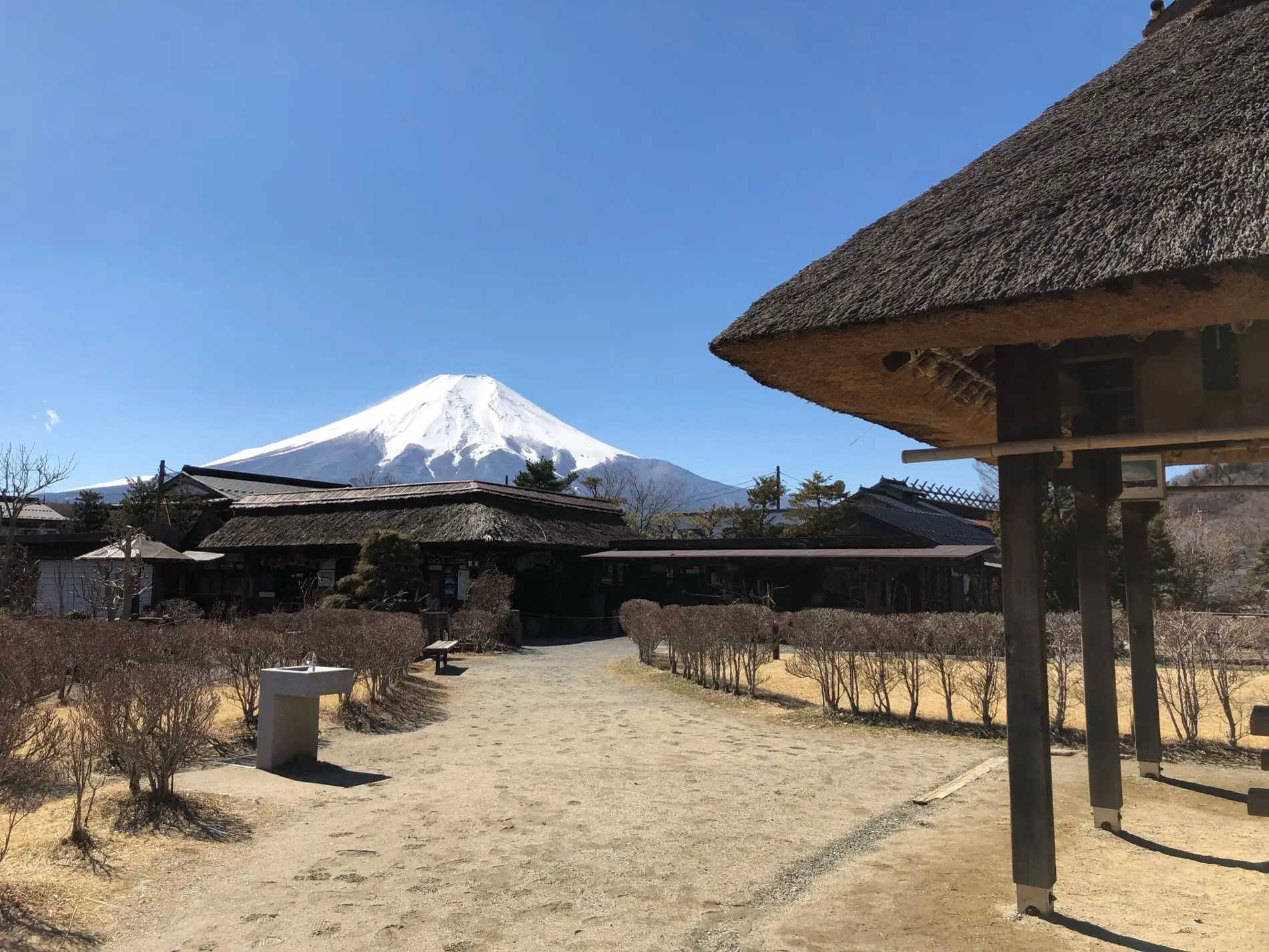
Mount Fuji is one of the clearest examples of a destination where the best choice depends on the number of stops. Trains and buses can bring travelers from Tokyo to the Mount Fuji area, and they can work well for visitors who plan to stay near one main location. The challenge begins when the itinerary includes several viewpoints, villages, lakes, flower parks or shopping stops in the same day.
Local attractions around Lake Kawaguchiko are spread apart. Public buses may involve waiting and fixed routes, while a private vehicle can connect several locations more directly. The driver and operations team can also consider changing the order of stops when clouds, traffic or seasonal crowds affect the plan.
A private car does not guarantee a clear view of Mount Fuji. Visibility depends on weather and cloud conditions, and road congestion can be severe during weekends and peak seasons. The advantage is flexibility, not control over nature or traffic.
Best fit for Mount Fuji Choose public transportation when you are visiting one or two main locations and are comfortable following the local timetable. Choose a private vehicle when your family wants several stops, hotel pickup, fewer transfers and a schedule that can be adjusted during the day.
Private car vs train for Hakone
Hakone is known for a sightseeing loop that can combine trains, buses, a cable car, a ropeway and a sightseeing ship. For many independent travelers, using these transport modes is part of the experience. A couple or small group may enjoy following the loop at their own pace.
The same loop can be tiring for senior travelers, families with strollers or groups that need frequent breaks. Weather can also affect some transport experiences. A private vehicle offers a simpler base and can connect selected attractions without requiring the group to manage every transfer.
The best option depends on what the group wants from Hakone. Travelers who want the classic transport loop may prefer public transport. Travelers who prioritize comfort, selected stops and less walking between connections may prefer a private car.
Private car vs train and bus in Kyoto
Kyoto’s major attractions are spread across different sides of the city. Trains reach some areas efficiently, but buses and walking are often required for the final connection. During cherry blossom season, autumn foliage and busy weekends, popular buses can become crowded.
A private vehicle can reduce the number of transfers and help organize a route such as Fushimi Inari, Kiyomizu-dera, Kinkaku-ji and Arashiyama. However, Kyoto traffic and parking must be considered carefully. Vehicles cannot always drop guests at the exact temple gate, and some attractions still require walking from the legal pickup point.
The most important advantage is route planning. A realistic private itinerary groups destinations in an efficient order and avoids attempting too many opposite sides of Kyoto in one day. A poorly planned car route can be just as tiring as a poorly planned public-transport route.
Which option is best for senior travelers?
Direct answer A private vehicle is usually the most comfortable option for senior travelers who cannot manage long walks, stairs or repeated station transfers. Trains can still be appropriate for short direct journeys when the hotel and destination are close to accessible stations.
Before choosing, discuss the traveler’s actual mobility rather than relying only on age. Some people in their seventies can comfortably walk all day, while a younger traveler may need regular rest or wheelchair support.
Questions to ask before planning the route
- How long can each traveler walk without resting?
- Are stairs, slopes or gravel paths difficult?
- Is a cane, walker or wheelchair required?
- How frequently are restroom breaks needed?
- Is the traveler sensitive to heat or cold?
- Would four relaxed stops be better than six rushed stops?
A private vehicle is most effective when the itinerary is also designed for seniors. Simply placing an exhausting six-stop route inside a private car does not make it senior-friendly.
Which option is best for families with children?
There is no single answer for every family. Trains can be exciting for children and very convenient for direct journeys. A private vehicle becomes more useful as the number of children, bags, transfers and planned stops increases.
Consider these factors
- The ages of the children
- Whether a stroller is required
- Child-seat requirements
- Nap and meal schedules
- The number of bags carried during the day
- How well the children handle crowds and long walks
- Whether the itinerary has several distant attractions
A family with one school-age child and a compact route may enjoy using trains. A family with toddlers, a stroller, grandparents and several bags may find a private vehicle significantly easier. The right choice can also change from day to day within the same trip.
Which option is best for groups of six to nine?
For larger groups, taxis are often the least practical because several vehicles may be required. Trains can still be economical, but keeping the group together becomes more difficult during transfers and crowded periods.
A private van can provide one meeting point, one departure time and one place for the group’s belongings. Practical capacity must still be confirmed. Passenger count alone is not enough; luggage, child seats, wheelchair space and comfort all affect the required vehicle.
Vehicle-capacity reminder Do not assume that a nine-seat vehicle can carry nine passengers and nine large suitcases. Send the exact passenger and baggage information before booking so the provider can recommend a safe and realistic arrangement.
How traffic affects private tours
Private transportation removes train transfers, but it does not remove road traffic. A responsible itinerary must include extra time for congestion, parking and legal pickup arrangements.
Conditions that can affect travel time
- Tokyo morning and evening rush hours
- Weekends and holidays near Mount Fuji and Hakone
- Cherry blossom and autumn foliage seasons
- Golden Week and other national holiday periods
- Road accidents, construction and closures
- Heavy rain, snow or severe weather
- Major events near the planned route
When traffic is severe, the group may need to reduce the number of attractions or shorten selected stops. A flexible itinerary means making reasonable choices within the booked duration, not guaranteeing that every destination will fit regardless of road conditions.
A hybrid transportation strategy is often best
The best Japan trip does not need to use only one type of transportation. Many travelers get a better balance by using trains where trains are strongest and private vehicles where door-to-door service creates the most value.
Practical combinations
- Take the Shinkansen from Tokyo to Kyoto, then use a private car for a Kyoto sightseeing day.
- Use trains for central Tokyo and reserve a private vehicle for Mount Fuji.
- Book an airport transfer on arrival day, then use public transportation during free days.
- Use a private car for the day that includes grandparents, then let younger family members explore independently by train on another day.
- Use the train between Osaka and Kyoto, then reserve a private vehicle for the approved Kyoto-Nara selected combination route. This is a carefully limited exception and does not mean that Osaka, Kyoto and Nara can all be combined as a standard one-day tour.
This approach avoids paying for private transportation when it adds little value while protecting comfort on the days that would otherwise be the most difficult.
How to choose the right transportation for your trip
Choose trains when:
- You are traveling alone or as a couple.
- Your route connects major stations directly.
- You have minimal luggage.
- Cost is your main priority.
- Everyone can walk and manage transfers comfortably.
- You are traveling between distant major cities.
Choose a private car when:
- You are traveling with young children or senior parents.
- Your group has several people and wants to stay together.
- You have large luggage, a stroller or mobility equipment.
- You want hotel pickup and one coordinated schedule.
- Your destinations are spread across one region.
- You value a flexible pace more than the lowest fare.
Choose taxis when:
- You need one short direct trip.
- The weather or fatigue makes walking difficult.
- Public transportation is no longer operating.
- The destination is inconvenient from the nearest station.
- The group and luggage can fit safely in one available taxi.
Five-question decision test
-
Can every traveler comfortably walk through stations and make several transfers?
-
Does the itinerary connect major stations, or are the attractions spread apart?
-
How many children, seniors, bags and mobility aids are involved?
-
Is the group prioritizing the lowest cost or the easiest day?
-
Would a mix of trains and private transportation work better than choosing only one?
Important planning note Transportation recommendations depend on the confirmed route, date, pickup area, vehicle availability, passenger count, luggage and mobility requirements. Attraction opening hours, traffic, weather and access rules may change. Final service conditions should always follow the written quotation and booking confirmation.