Neither destination is automatically better for every traveler. The right choice depends on your priorities, the season, the weather forecast, the ages and mobility of the people traveling with you, and how much activity you want to fit into one day. Families with toddlers, elderly parents or mobility concerns should pay particular attention to walking levels and transportation changes rather than choosing only by photographs.
Not sure which day trip fits your group? Share your travel date, Tokyo hotel, number of guests, children’s ages, mobility needs and top priorities. Nomad Diaries can recommend Mount Fuji, Hakone or a realistic combination. HELP ME CHOOSE MY DAY TRIP Secondary option: View Mount Fuji and Hakone Tours
Mount Fuji vs Hakone: quick comparison
| Factor | Mount Fuji and Kawaguchiko | Hakone |
|---|---|---|
| Main reason to visit | Classic Mount Fuji views and lakeside scenery | A varied mountain-resort experience |
| Typical highlights | Oshino Hakkai, Lake Kawaguchiko, Oishi Park, Chureito Pagoda | Lake Ashi, Hakone Shrine, Owakudani, ropeway, museums |
| Best for | Photography, iconic scenery and a relaxed scenic route | Activities, art, volcanic scenery and hot-spring culture |
| Mount Fuji visibility | Often the central focus of the day | Possible from selected areas, but not the only reason to visit |
| Public transport style | Train or bus to the area, then local connections | A well-known loop using train, cable car, ropeway, cruise and bus |
| Private-car benefit | Easier movement between scattered viewpoints | Fewer transfers between attractions and transport modes |
| Walking level | Can be kept low, except locations such as Chureito Pagoda | Varies widely; shrine, museums and transfers can add walking |
| Good for children | Yes, especially with a relaxed route | Yes, particularly for children who enjoy rides and varied activities |
| Good for seniors | Yes, when accessible viewpoints are selected | Yes, when stairs and transport changes are minimized |
| Poor-weather resilience | Lower if the mountain is hidden, but alternatives exist | Higher variety of indoor alternatives, though services can be disrupted |
What is the main difference between Mount Fuji and Hakone?
Mount Fuji and Hakone are part of the same broad national-park region, but they create very different day-trip experiences. Travelers sometimes treat them as interchangeable because both can include mountain scenery and possible views of Mount Fuji. In practice, the layout, activities and purpose of the visit are different.
Mount Fuji and Lake Kawaguchiko
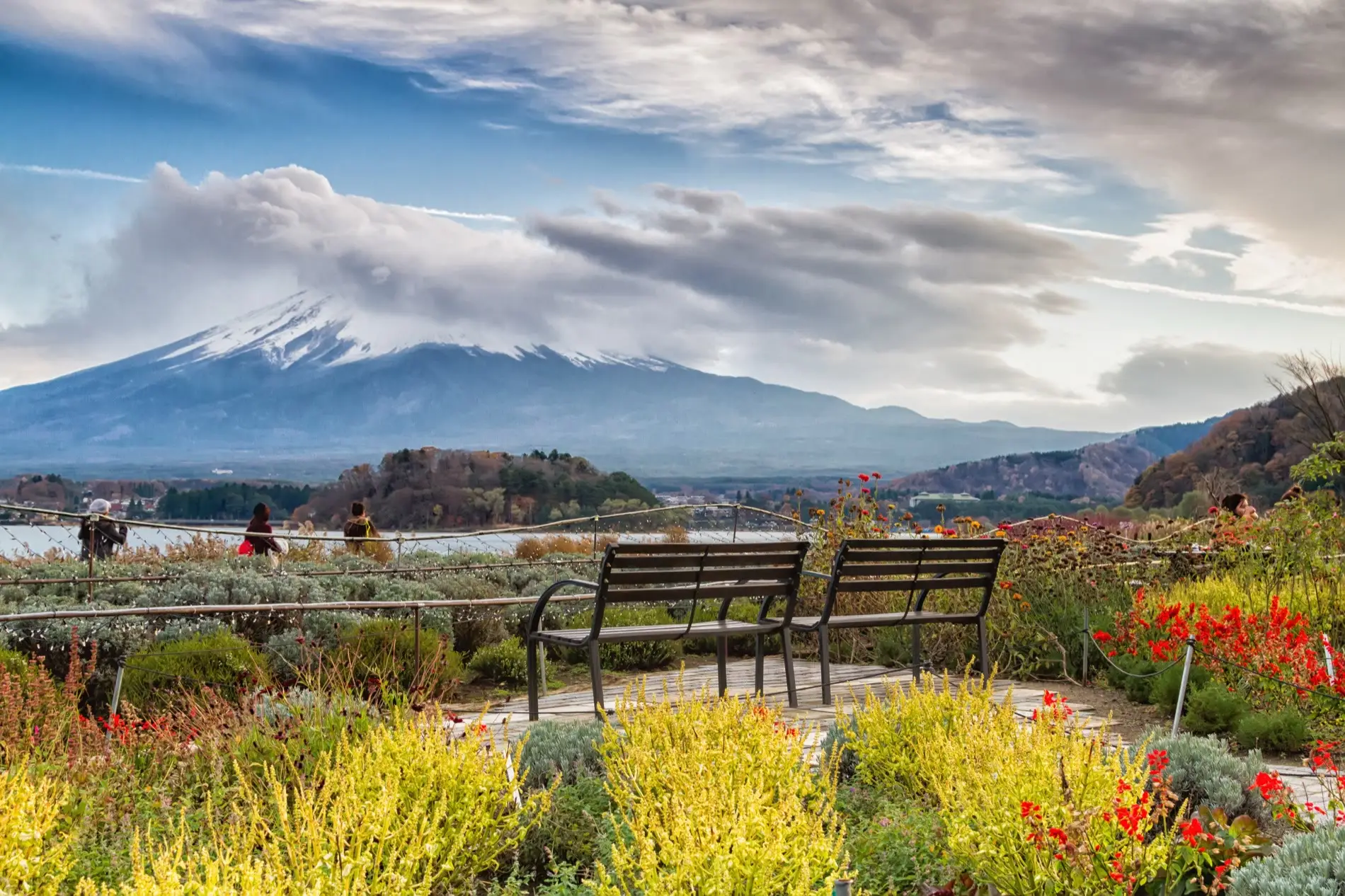
A Mount Fuji day trip is usually centered on the mountain itself. The most popular first-time route uses the northern side around the Fuji Five Lakes, especially Lake Kawaguchiko and Fujiyoshida. The day is built around viewpoints, seasonal landscapes, traditional scenery and photographs.
- Classic Mount Fuji viewpoints
- Lake Kawaguchiko and lakeside parks
- Oshino Hakkai and traditional village scenery
- Seasonal flowers and autumn foliage
- Pagoda-and-mountain compositions
- Relaxed scenic driving between stops
Hakone
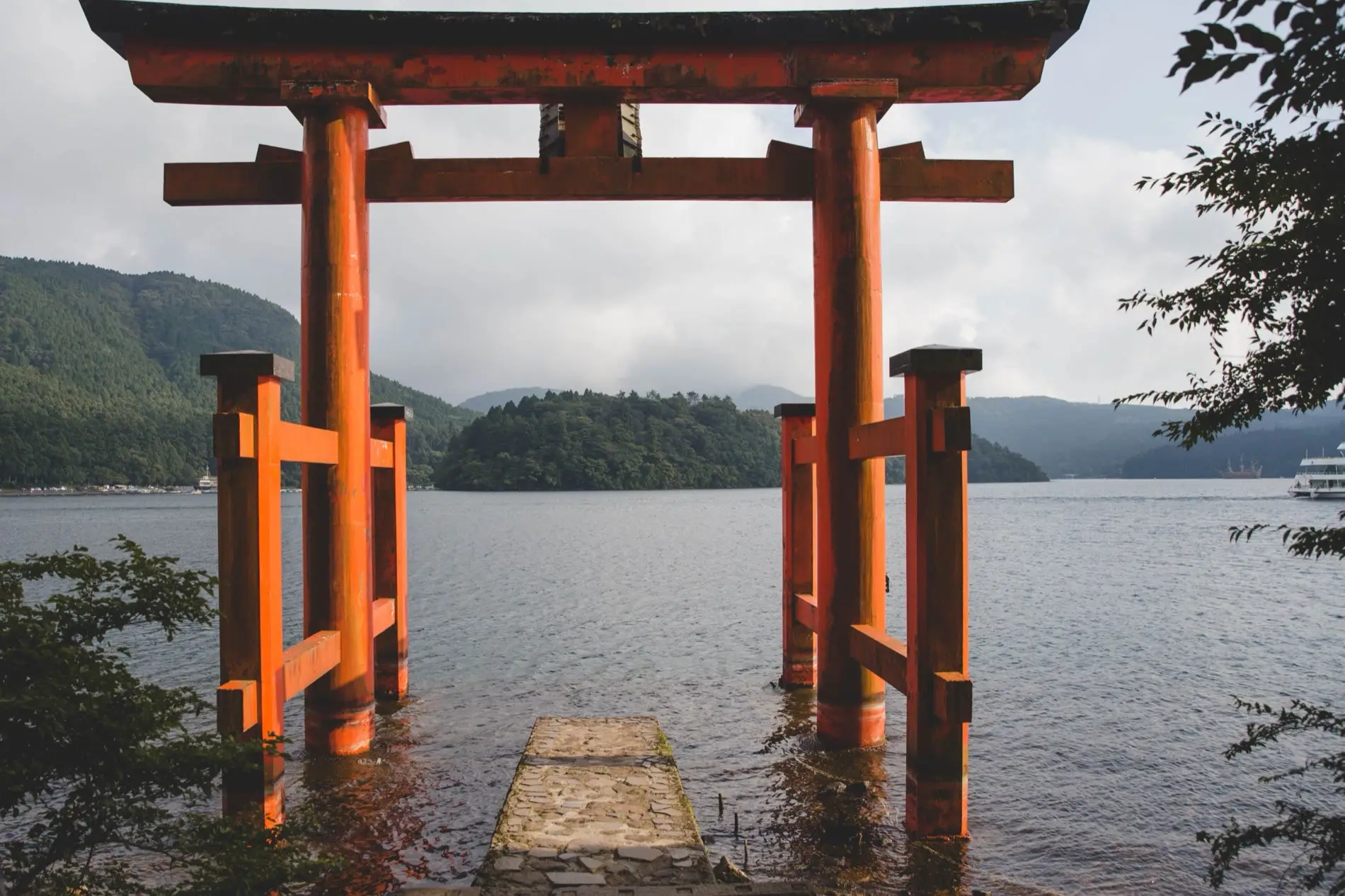
Hakone is a resort and sightseeing region with several distinct experiences. A typical visit may include Lake Ashi, Hakone Shrine, Owakudani, the ropeway, art museums and an onsen or resort stop. Mount Fuji can be visible from selected locations, but the trip remains worthwhile even when the mountain is hidden.
- Lake Ashi scenery and sightseeing cruise
- Owakudani volcanic landscape
- Ropeway and mountain transportation
- Hakone Shrine and forest atmosphere
- Art museums and indoor attractions
- Hot springs and resort culture
Simple way to remember the difference Mount Fuji is usually chosen for the mountain and its iconic views. Hakone is usually chosen for the variety of experiences available around a mountain-resort area.
Which destination offers better Mount Fuji views?
Lake Kawaguchiko generally offers the stronger choice for travelers whose main goal is seeing and photographing Mount Fuji. The northern shore, Oishi Park, Oshino Hakkai and parts of Fujiyoshida provide several different foregrounds and angles. Because there are multiple viewpoints, a private route can adjust the order of stops according to cloud movement, crowds and the group’s priorities.
Hakone can also provide attractive Mount Fuji views, particularly around Lake Ashi and elevated locations such as the ropeway or Owakudani on a clear day. However, the mountain may appear farther away or less dominant than it does around Kawaguchiko. Hakone should therefore be chosen for its complete experience rather than solely as a guaranteed Fuji-viewing destination.
Visibility is never guaranteed Mount Fuji can be partly or completely hidden by cloud, haze or rain at either destination. A clear morning in Tokyo does not guarantee a clear mountain later in the day. No responsible tour operator should promise an unobstructed view.
Which destination has more things to do?
Mount Fuji-area activities
- Oshino Hakkai
- Lake Kawaguchiko viewpoints
- Oishi Park
- Chureito Pagoda and Arakurayama Sengen Park
- Fuji Subaru Line Fifth Station when accessible
- Seasonal flower parks
- Cultural attractions and local food
- Gotemba shopping when the route allows
The Mount Fuji area has many possible stops, but most are connected by the shared theme of scenery, culture and the mountain. This is excellent for visitors who value photographs and a relaxed visual experience, but younger children may lose interest if the route contains too many similar viewpoints.
Hakone activities
- Lake Ashi and the sightseeing cruise
- Hakone Shrine
- Owakudani
- Hakone Ropeway
- Hakone Open-Air Museum
- Other art museums and galleries
- Hot-spring facilities and resort experiences
- Scenic mountain drives and viewpoints
Hakone usually provides greater variety in one day. The itinerary can move from a lake to a shrine, then to a volcanic area, museum or hot-spring experience. This variety can be especially useful when some family members prefer activities over repeated photo stops.
Which is better for first-time Japan visitors?
For a first-time visitor, the decision should begin with one question: would you regret leaving Japan without seeing classic Mount Fuji scenery? If the answer is yes, prioritize Kawaguchiko. If the answer is no and you would rather have a full day of different experiences, Hakone may provide better overall value.
| Decision | Best fit |
|---|---|
| Choose Mount Fuji when | Seeing the mountain is a personal priority; you want recognizable Japan photographs; you prefer lakes, villages and scenic parks; and you accept that visibility is weather-dependent. |
| Choose Hakone when | You want a varied destination experience with lakes, volcanic scenery, rides, museums or hot springs; and you want the day to remain interesting even when Mount Fuji is hidden. |
Which is better for families with children?
Mount Fuji with children
Mount Fuji can work very well for families when the route is kept simple. Children can rest in the vehicle between stops, families can carry snacks and extra clothing, and the itinerary can be shortened if a child becomes tired. Open spaces around lakes and parks may feel less restrictive than a day of repeated transport transfers.
- Good for relaxed family photographs
- Flexible scenic stops
- Space to rest between attractions
- Parks and lakeside areas for movement
- Easier management of strollers and family bags in a private vehicle
The main limitation is attention span. A route with four or five similar viewpoints may be meaningful to adults but repetitive for young children. Chureito Pagoda also requires a significant climb and should not be included automatically.
Hakone with children
Hakone may be more engaging for children who enjoy transport rides and changing activities. The ropeway, sightseeing cruise, volcanic scenery and interactive or open-air museums can make the day feel more active. Indoor attractions also provide options when the weather is poor.
- More variety across the day
- Ropeway and cruise experiences
- Museums and activity-based attractions
- Indoor alternatives
- Strong choice for older children who enjoy exploration
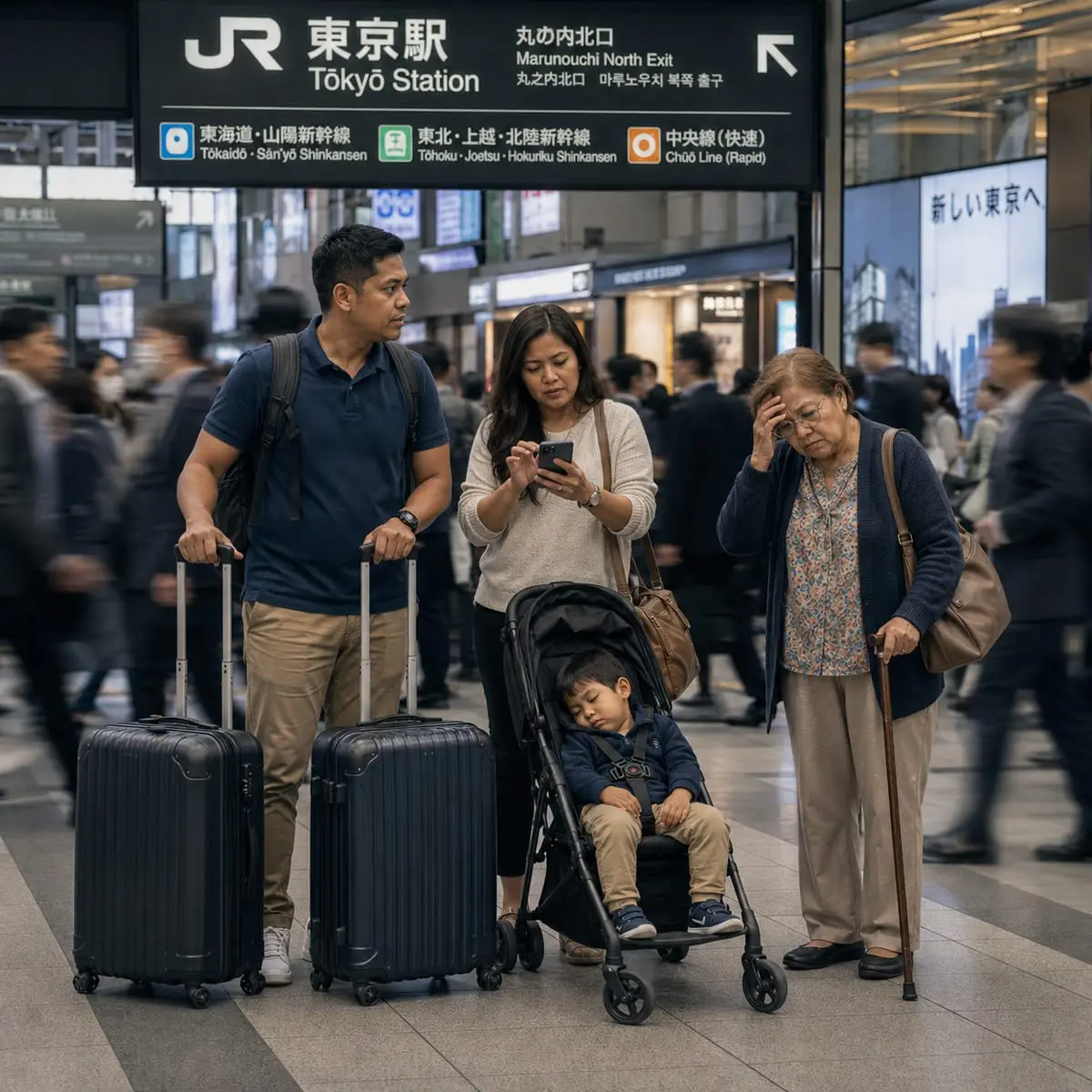
The challenge is that public-transport loops can involve queues, boarding, stairs and transfers. A stroller may need to be folded, and young children can become tired when several transport modes are combined. A private vehicle reduces some transfers but does not eliminate walking or queues at attractions.
Family recommendation Hakone may be more entertaining for active children who enjoy rides and varied attractions. Mount Fuji may be better for families seeking a slower scenic day with fewer transitions. For toddlers or children who nap, the simpler route is often the better route.
Which is better for elderly parents?
Both destinations can be adapted for senior travelers, but the attraction selection matters more than the destination name. A private vehicle reduces station transfers and transportation-related walking, yet guests still need to enter attractions, use restrooms and walk through outdoor areas.
Mount Fuji may be better when
- The route uses vehicle-accessible lake and park viewpoints
- Chureito Pagoda is omitted
- The family prefers scenery over rides
- The itinerary contains three or four stops rather than six
- Longer lunch and restroom breaks are included
Hakone may be better when
- The group prefers museums, indoor attractions or an onsen atmosphere
- The private vehicle handles most movement between areas
- Ropeway and cruise boarding are manageable
- Stairs at Hakone Shrine are avoided or reduced
- The itinerary is designed around one side of Hakone instead of the full loop
Mobility note A private vehicle reduces unnecessary walking, but it does not make every attraction step-free. Tell the tour operator about knee pain, wheelchair use, walking limits, heat sensitivity and the need for frequent restrooms before the route is confirmed.
Which destination requires more walking?
Walking depends on the exact stops rather than the destination as a whole. Mount Fuji can be designed as a low-walking scenic route, while Hakone can become demanding when the itinerary combines shrine steps, museum grounds and public-transport transfers. The reverse is also possible if Mount Fuji includes Chureito Pagoda or long park walks.
| Experience | General walking level | Main concern |
|---|---|---|
| Oishi Park | Low to moderate | Outdoor pathways and weather exposure |
| Lake Kawaguchiko viewpoint | Low to moderate | Varies by the selected shoreline stop |
| Oshino Hakkai | Moderate | Crowds, uneven sections and walking between ponds |
| Chureito Pagoda | High | A 398-step climb to the well-known observation area |
| Lake Ashi viewpoint | Low to moderate | Distance depends on parking and the chosen lakeside area |
| Hakone Shrine | Moderate to high | Forest pathways, slopes and steps |
| Owakudani | Moderate | Slopes, weather exposure and busy viewing areas |
| Hakone Open-Air Museum | Moderate to high | Large outdoor grounds |
| Ropeway and cruise | Moderate | Boarding, queues and transfers |
Which is easier by public transportation?
Mount Fuji by public transportation
Independent travelers can reach Kawaguchiko by limited-express train or highway bus. This works well when the plan focuses on one or two attractions near the main transport route. Visiting several viewpoints requires local buses, taxis or additional walking, and the return schedule must be protected.
Hakone by public transportation
Hakone has a well-established sightseeing network. A classic loop may combine the mountain railway, cable car, ropeway, sightseeing cruise and bus. For active independent travelers, these transport modes are part of the attraction. For families with strollers, senior travelers or large groups, the repeated changes can become the most tiring part of the day.
Public-transport summary Hakone has the more structured sightseeing network. Mount Fuji attractions are more geographically spread out. A private car simplifies both destinations, but it solves different problems in each one.
Which destination benefits more from a private car?
Mount Fuji private-car advantages
- Direct pickup from a Tokyo hotel
- Easier access to several viewpoints in one day
- No waiting for local sightseeing buses
- Flexible stop order when clouds or crowds change
- More practical for families, strollers and groups
- Belongings may remain in the vehicle when safe and appropriate
Hakone private-car advantages
- Fewer transfers between train, cable car, bus and boat
- Simpler movement between Lake Ashi, Owakudani, shrine and museums
- Reduced transport-related walking
- Easier adjustment when ropeway or cruise service is disrupted
- More comfortable pacing for children and elderly parents
A private car does not need to replace every Hakone experience. A family can use the vehicle for the difficult transfers and still take a selected ropeway or cruise segment. This hybrid approach preserves the memorable activity while avoiding the full public-transport loop.
Which is better during bad weather?
Mount Fuji during cloudy or rainy weather
The main risk is that the mountain may be completely hidden. The day can still include Oshino Hakkai, lakeside scenery, cultural attractions, cafés, museums or shopping, but travelers who booked only for a clear Fuji photograph may feel disappointed. The itinerary should therefore contain at least one or two attractions that remain enjoyable without a mountain view.
Hakone during cloudy or rainy weather
Hakone usually offers more indoor alternatives, including museums, restaurants and hot-spring facilities. However, bad weather can also affect ropeway operations, sightseeing cruises, lake views and road travel. Hakone is more resilient than a view-only itinerary, but it is not immune to disruption.
Weather recommendation Hakone may offer a stronger backup plan when Mount Fuji is hidden. Mount Fuji remains the better choice when the mountain is the non-negotiable goal and the weather outlook is favorable. Final decisions should still be based on the family’s priorities, not a forecast alone.
Which is better by season?
| Season | Mount Fuji and Kawaguchiko | Hakone |
|---|---|---|
| Winter | Snow-covered mountain appearance and often clearer air; very cold and possible road restrictions | Strong onsen atmosphere and winter scenery; lake and ropeway areas can be extremely cold |
| Spring | Cherry blossoms and seasonal flowers; major crowds during peak bloom | Fresh greenery, gardens and museums; generally good variety even if Fuji is cloudy |
| Summer | Green scenery and longer daylight; haze and cloud cover can reduce visibility | Mountain-resort atmosphere, museums and varied activities; less dependent on a clear Fuji view |
| Autumn | Lake scenery with foliage and strong photography opportunities; heavy weekend traffic | Mountain foliage, museums and scenic drives; also crowded during peak color |
There is no universal seasonal winner. Winter often favors Mount Fuji for iconic scenery and Hakone for hot-spring atmosphere. Summer may favor Hakone for activity variety when clouds make mountain visibility uncertain. Spring and autumn are excellent for both, but traffic and crowds must be treated as major itinerary factors.
Which is better for photography?
Choose Mount Fuji for
- Iconic mountain compositions
- Lake reflections and lakeside foregrounds
- Seasonal flowers
- Traditional village scenery
- Pagoda-and-mountain photographs
- Family portraits with Mount Fuji
Choose Hakone for
- Lake Ashi scenery
- Torii gate and shrine atmosphere
- Volcanic landscapes
- Ropeway views
- Forest pathways
- Museum architecture and sculpture
- Mountain-resort scenes
Photography-focused travelers should schedule fewer stops. Time spent waiting for cloud movement, finding a good composition and avoiding crowds can easily exceed the planned stop time. A route with three strong locations usually produces better photographs than a rushed route with six locations.
Which is better for couples?
Mount Fuji suits couples who want scenic photographs, relaxed lakeside stops, seasonal flowers and an iconic Japan memory. Hakone suits couples who want a resort atmosphere, museums, a lake cruise, hot springs and a wider range of shared activities. Neither destination is automatically more romantic; the best choice depends on what the couple enjoys doing together.
Which is better for a short Japan itinerary?
| Priority | Recommendation |
|---|---|
| Prioritize Mount Fuji when | The traveler considers seeing Mount Fuji essential, only has one day outside Tokyo, wants recognizable photographs and is willing to accept visibility risk. |
| Prioritize Hakone when | The traveler wants a complete destination experience even without a clear Fuji view, enjoys museums or hot springs and prefers variety over one iconic sight. |
Travelers with a very short itinerary should also consider fatigue. A demanding day trip immediately after an overnight flight may be less enjoyable than a closer Tokyo day. Airport arrival time, sleep, children’s energy and elderly parents’ stamina should be considered before booking either destination.
Can Mount Fuji and Hakone be visited in one day?
Yes, they can technically be combined, but the result is an overview rather than two complete tours. The regions are separate, and the combined route involves more driving, fewer attractions in each area and greater sensitivity to traffic. A realistic plan usually selects two or three Mount Fuji-area stops and one or two Hakone highlights.
Who may enjoy a combination tour?
- Active adults
- Repeat Japan visitors
- Travelers who want selected highlights rather than depth
- Groups comfortable with a long day
- Guests using a private vehicle and departing early
Who should usually avoid it?
- Families with toddlers
- Travelers with elderly parents who tire easily
- Guests with significant mobility limitations
- Photography-focused travelers
- Visitors who dislike rushing
- Anyone expecting to complete every major attraction
Important expectation A combined Mount Fuji-Hakone tour is not two full tours sold as one. It is a highlights route. Traffic, weather, operating conditions and the group’s pace may require one of the later stops to be removed.
Suggested one-day itineraries
Mount Fuji-focused itinerary
- Early Tokyo hotel pickup
- Oshino Hakkai
- Lake Kawaguchiko viewpoint or Oishi Park
- Lunch
- One seasonal or family-selected attraction
- Final viewpoint and return to Tokyo
Hakone-focused itinerary
- Early Tokyo hotel pickup
- Lake Ashi
- Hakone Shrine or an accessible lakeside alternative
- Lunch
- Owakudani or a selected ropeway segment
- Museum or scenic stop
- Return to Tokyo
Mount Fuji-Hakone combination itinerary
- Very early Tokyo pickup
- Oshino Hakkai
- Lake Kawaguchiko viewpoint
- Short lunch
- Drive toward Hakone
- Lake Ashi
- One additional Hakone highlight
- Return to Tokyo
How much do the private tours cost?
The Nomad Diaries published reference rate for the Kanto area lists the Mount Fuji Day Tour, Hakone Day Tour and Mount Fuji-Hakone Day Tour at the same price. This allows travelers to choose by experience rather than assuming the combined route automatically provides more sightseeing value.
| Private tour | Official reference price | Approximate USD |
|---|---|---|
| Mount Fuji Day Tour | ¥130,000 | Approximately US$810 |
| Hakone Day Tour | ¥130,000 | Approximately US$810 |
| Mount Fuji-Hakone Day Tour | ¥130,000 | Approximately US$810 |
Currency notice Japanese-yen prices are the official reference prices. US-dollar amounts are approximate and use the Bank of Japan August 2026 reference rate of ¥161 per US$1. The converted amount may differ according to the exchange rate, card network and payment provider used when payment is processed.
The final quotation may also depend on the pickup area, travel date, vehicle availability, number of guests, luggage, overtime, guide request, child seat, wheelchair arrangement, photographer request and other special requirements. Attraction tickets, meals and personal expenses are not included unless specifically stated in the quotation.
Simple decision guide
Choose Mount Fuji when
- Seeing Mount Fuji is the main goal
- You want classic mountain photographs
- You prefer lakes, villages and scenic parks
- You want a relaxed driving itinerary
- You accept weather-dependent visibility
Choose Hakone when
- You want more varied activities
- You enjoy museums, lakes and mountain transportation
- You are interested in hot-spring culture
- You want alternatives when Fuji is hidden
- Your children prefer rides and activities over viewpoints
Choose both when
- You understand the day will be fast-paced
- You are comfortable with fewer stops in each region
- Everyone can manage a long touring day
- You value variety more than depth
- You are using private transportation and leaving early
Common planning mistakes
-
Assuming Hakone and Lake Kawaguchiko are the same area
-
Believing Mount Fuji visibility is guaranteed
-
Trying to include every attraction in one day
-
Underestimating the distance between the two regions
-
Choosing Chureito Pagoda without checking mobility
-
Forgetting that Hakone transport services can be disrupted
-
Ignoring return traffic to Tokyo
-
Planning a late departure
-
Comparing tour prices without reviewing inclusions
-
Failing to disclose strollers, wheelchairs or luggage
-
Treating a combined tour like two complete tours
-
Not identifying the family’s top two or three priorities
Still deciding between Mount Fuji and Hakone?
The better day trip depends on your travel date, hotel location, group size, children’s ages, mobility needs and the experiences that matter most to your family. A realistic recommendation should also consider the weather, seasonal traffic and whether your group values scenery, activities or a balance of both.
Let Nomad Diaries recommend the right route Send your Tokyo hotel, travel date, number of guests and top priorities. Our team will recommend Mount Fuji, Hakone or a realistic combination, together with the suitable vehicle and expected pace. HELP ME CHOOSE MY DAY TRIP View Mount Fuji and Hakone Tours
Suggested inquiry fields
- Travel date
- Tokyo hotel or pickup area
- Number of adults, children and seniors
- Children’s ages
- Number and size of luggage
- Wheelchair, stroller or mobility requirements
- Top three preferred experiences
- Email and WhatsApp or Viber contact
About this guide Operating schedules, road access, seasonal restrictions, attraction hours and accessibility can change. We recheck the official sources for your actual travel date before confirming an itinerary.